Ingen Ryuki
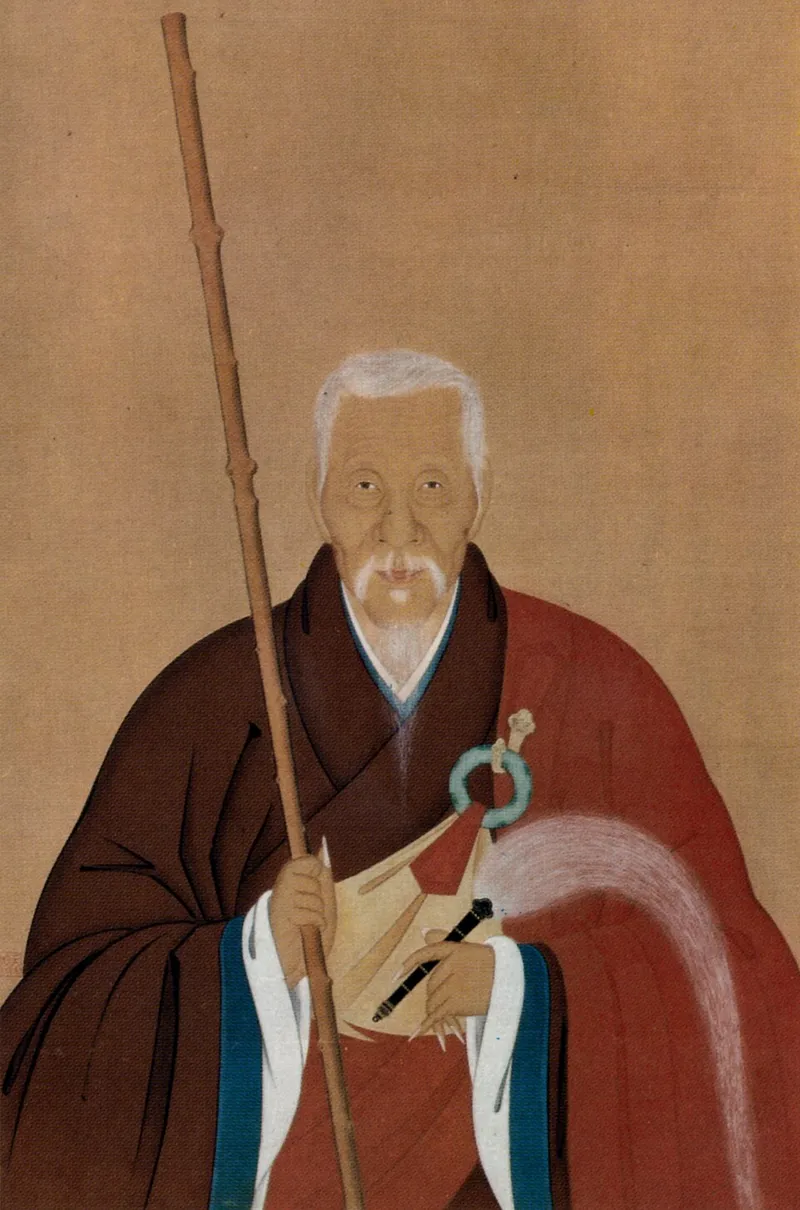
Ingen Ryuki
1592 – 1673
Ingen Ryūki (隠元隆琦, Chinese: Yǐnyuán Lóngqí, 1592–1673) was a late-Ming Chinese Linji master from Fuqing in Fujian Province who emigrated to Japan in 1654 and founded the Ōbaku-shū, the third great Japanese Zen school alongside Rinzai and Sōtō[1]. Before leaving China he had served as abbot of the Wànfú-sì (萬福寺) on Mount Huángbò in Fujian — the same Huangbo (Ōbaku) associated with the Tang master Huangbo Xiyun — and his Japanese disciples deliberately took that mountain-name as the new school's name[2].
He landed at Nagasaki in 1654 at the invitation of the Chinese emigrant Buddhist community already established there, and after several years of teaching was granted land in Uji on which he founded Manpuku-ji in 1661, building it as a complete Ming-Chinese architectural complex unlike anything in the existing Japanese tradition[3]. The Ōbaku style he transmitted combined Linji koan practice with explicit *nianfo* (nembutsu) recitation, strict vinaya observance, and the Ming-period repertoire of sutra chanting, calligraphy, ink-painting, woodblock printing, and *sencha* steeped-tea drinking; through Manpuku-ji and its branch network these became significant cultural imports into Tokugawa Japan and provided part of the impetus for Hakuin's roughly contemporary reform of the existing Rinzai school[4].
Names
Teachers and lineage of Ingen Ryuki
Teachers / root masters:
Master Record Sources
1592-1673
Ingen Ryuki
Obaku
- teachersWikipedia - Zen Lineage Charts
Feiyin Tongrong