Ōbaku
Zen
Ōbaku
黄檗宗
Branch of Linji
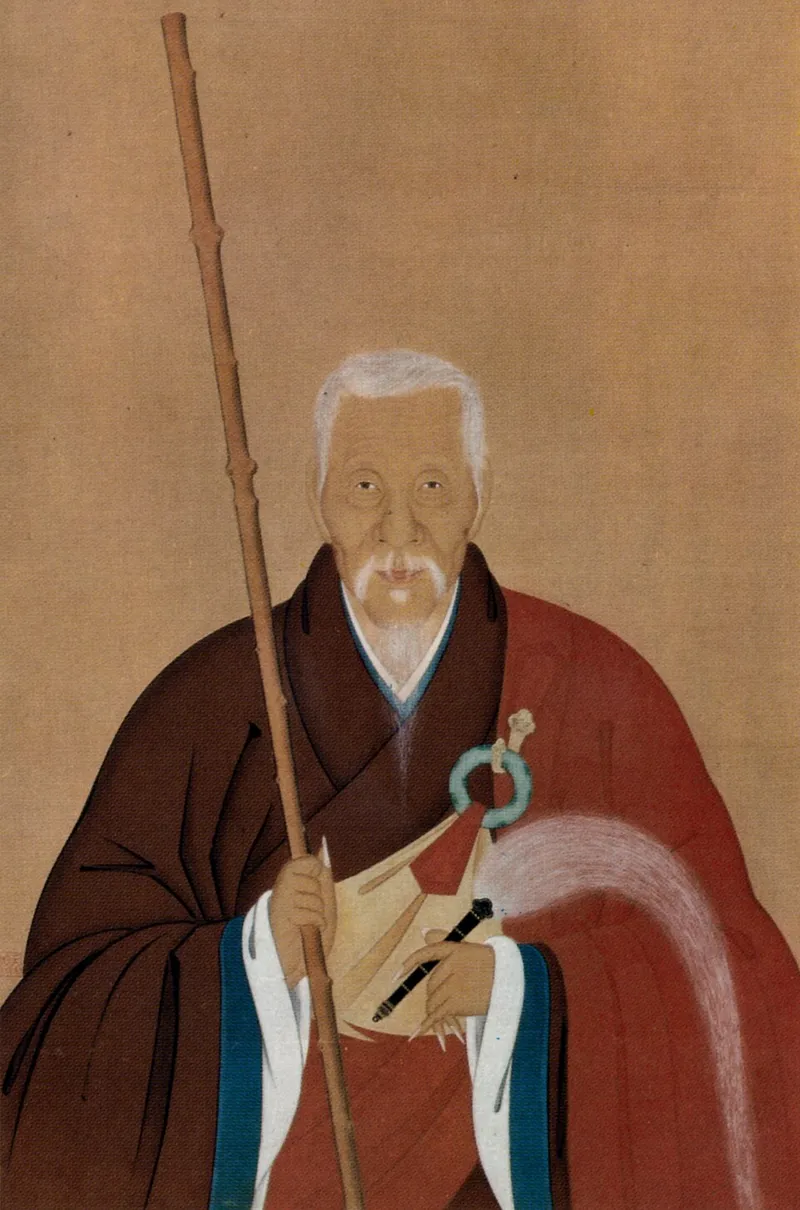
The Ōbaku school (黄檗宗) is the third major school of Japanese Zen, founded in 1661 by the Chinese Chan master Ingen Ryūki (Yinyuan Longqi, 1592–1673), who brought late-Ming Chinese Linji Chan to Japan[1]. Named after Huangbo (Ōbaku) Mountain—the monastery of the great Tang dynasty master Huangbo Xiyun—the school established its headquarters at Manpuku-ji in Uji, near Kyoto[1][2]. The Ōbaku school is distinctive for preserving Chinese liturgical forms, including the recitation of the nembutsu (nianfo) alongside Zen meditation, reflecting the syncretic Chan-Pure Land practice that had become standard in late-Ming China[2]. The school also introduced Ming dynasty architectural styles, calligraphy, painting, and the sencha tea ceremony to Japan, profoundly influencing Japanese culture[2]. Tetsugen Dōkō, a prominent figure in the early Ōbaku school (dharma heir of Muan Xingtao), is celebrated for his monumental project of carving the entire Chinese Buddhist canon (Ōbaku edition of the Tripitaka) in woodblock, a feat of devotion that took over a decade[3].
Meditation practice
Ōbaku practice combines Chan-style zazen with recitation of the nembutsu (南無阿弥陀仏), preserving the Chan-Pure Land synthesis common in late-Ming Chinese Buddhism rather than the more sharply differentiated Japanese Zen style[2]. Recitation is not treated as merely devotional: it can become a contemplative pivot when joined to the question ‘Who is it that recites the Buddha’s name?’ so that nembutsu and meditative inquiry reinforce each other. The school also maintains a distinctive liturgical, musical, and monastic culture inherited from Ming China, giving practice a strongly communal and ceremonial character. In Ōbaku, seated meditation, chanting, ritual form, and Pure Land invocation belong to one integrated discipline.
Key texts
- Ōbaku Shingi
'Ōbaku Pure Standards' — the founder's monastic rule for Manpuku-ji. Codifies the Chinese-style liturgy, chanting, and monastic organization that distinguishes Ōbaku from Rinzai and Sōtō.
- Ōbaku Edition of the Tripiṭaka
The first complete Chinese Buddhist canon printed in Japan — 7,334 fascicles on roughly 60,000 woodblocks, carved under Tetsugen's leadership. Based on the Ming-dynasty Jiaxing edition; an extraordinary feat of devotion and scholarship still printed at Manpuku-ji today.
- Tetsugen's Three Lives Sermon
The famous teaching story in which Tetsugen, having twice used the money collected for the Tripiṭaka to feed famine victims, finally completes the canon on his third try. Ōbaku's paradigm for practice as compassionate engagement.
Key concepts
- Nembutsu kōan
The characteristic Ōbaku combination: recite the Buddha's name while holding the question 'Who is it that recites?' The Chan–Pure Land synthesis turned into a concrete meditative exercise.
- Fucha ryōri
The vegetarian 'universal tea cuisine' Ōbaku monks developed, blending Ming Chinese monastic cooking with Japanese ingredients. A living part of the school's culture — still served to retreat guests at Manpuku-ji.
- Ming-style liturgy
Ōbaku preserves Ming Chinese sutra-chanting melodies, instruments (especially the mokugyo wooden fish), and ritual forms largely unchanged since Ingen brought them in 1654. The school functions as a living museum of 17th-century Chinese Chan practice.