Musō Soseki
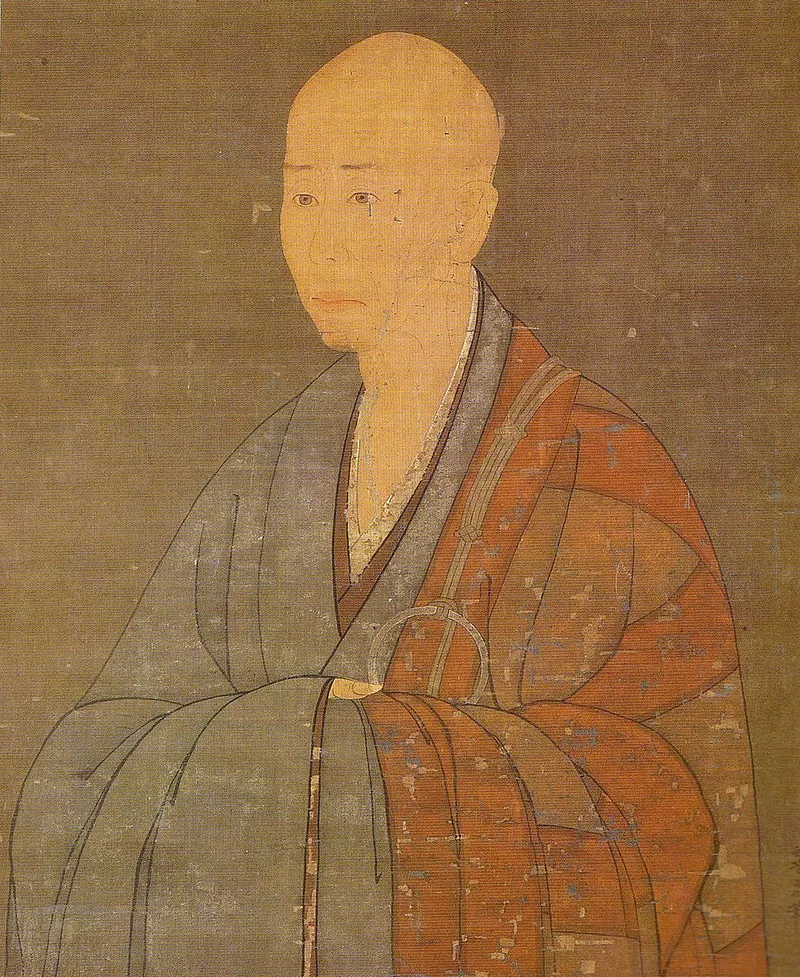
Musō Soseki
1275 – 1351
Musō Soseki (1275–1351) was the most politically influential Zen master in Japanese history and one of the greatest garden designers the world has produced. Ordained as a young man, he studied under several masters before receiving dharma transmission from Kōhō Kennichi of the Chinese émigré lineage. Despite his inclination toward solitary mountain practice, he was repeatedly summoned to serve the imperial court and the shogunate, eventually serving as advisor to Emperor Go-Daigo and then to Ashikaga Takauji, the founder of the Muromachi shogunate. He was awarded the title of National Teacher by seven successive emperors — a distinction unmatched in Japanese history.
Musō's cultural legacy is enormous. He designed the gardens at Tenryū-ji, Saihō-ji (the Moss Temple), and numerous other temples, creating landscapes that express Zen principles of emptiness, naturalness, and the interpenetration of the constructed and the wild. He founded Tenryū-ji in Kyoto, which became one of the leading Gozan monasteries, and he established a network of provincial temples called Ankokuji throughout Japan. His school, the Musō-ha, became the dominant force in medieval Japanese Zen, and his influence shaped the aesthetic sensibility of the entire Muromachi period — the golden age of Japanese ink painting, Noh drama, and the tea ceremony. His "Dialogues in a Dream" (Muchū Mondō) remains an important text on the application of Zen to governance and daily life.
Master Record Sources
No citations attached yet.