Rinzai
Zen
Rinzai
臨済宗
Branch of Linji
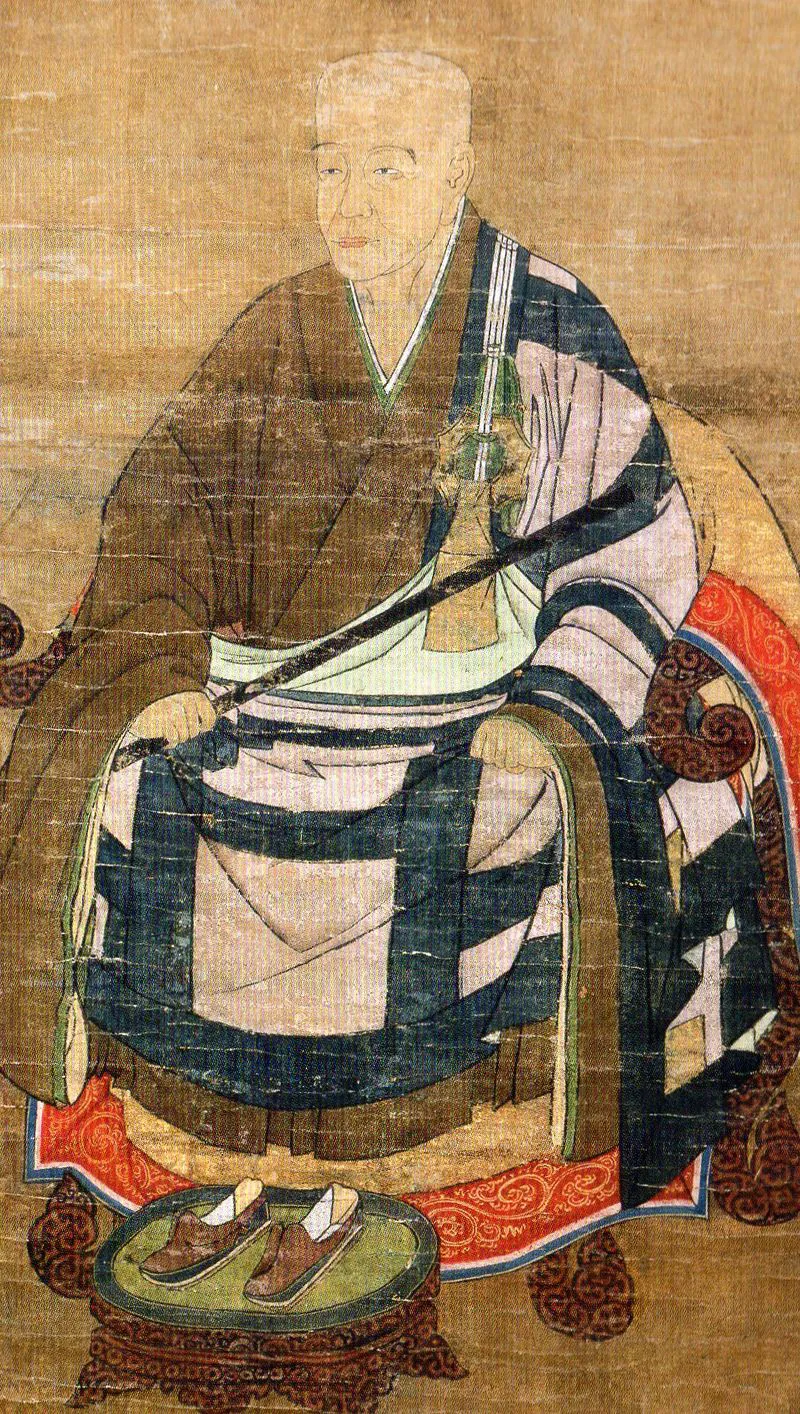
The Rinzai school (臨済宗) is the Japanese form of the Chinese Linji tradition, transmitted to Japan through multiple lineages during the Kamakura period (1185–1333)[1]. The school's defining figure is Hakuin Ekaku (1686–1769), who single-handedly revived and systematized Rinzai practice after a period of decline[2]. Hakuin developed the structured koan curriculum that remains standard today—beginning with the Mu koan or the sound of one hand clapping, then progressing through increasingly subtle layers of inquiry. His emphasis on 'great doubt, great faith, great determination' as the three pillars of practice became definitive[2]. The modern Rinzai school is organized primarily through the O-To-Kan lineage: Nanpo Jomyo (Daio Kokushi) received transmission from the Chinese master Xutang Zhiyu, transmitted to Shuho Myocho (Daito Kokushi, founder of Daitokuji), who transmitted to Kanzan Egen (founder of Myoshinji)[3]. These two temple complexes—Daitokuji and Myoshinji—and their extensive branch networks form the institutional backbone of modern Rinzai Zen. The school profoundly influenced Japanese culture, including the tea ceremony, calligraphy, ink painting, garden design, and the martial arts.
Meditation practice
Rinzai Zen is defined by Hakuin Ekaku’s systematized koan curriculum, in which practitioners work through a graded sequence of koans in private sanzen interviews, often beginning with Mu or ‘the sound of one hand’ and moving through breakthrough, integration, and embodiment cases[2]. Hakuin made ‘great doubt, great faith, and great determination’ the engine of practice, and he paired koan work with strong posture, concentrated breath-energy, and demanding retreat discipline. Intensive sesshin, with many hours of zazen and repeated sanzen, is the classic environment in which doubt ripens into kensho (seeing one’s true nature)[4]. After initial breakthrough, training continues through further koans, literary study, and continued interview so that insight is refined rather than romanticized.
Prominent masters
The earliest Japanese Rinzai pioneers were Myōan Eisai (1141–1215), who introduced Linji-line Chan to Japan after his second voyage to Song China and founded Kennin-ji[5], and Enni Ben'en (1202–1280), founder of Tōfuku-ji, who carried back the Yangqi-line transmission of Wuzhun Shifan[6]. The dominant institutional line, however, descends from Nanpo Jōmyō (Daiō Kokushi, 1235–1309), who received Xutang Zhiyu’s seal in China; through his student Shūhō Myōchō (Daitō Kokushi, 1283–1338), founder of Daitoku-ji; to Kanzan Egen (1277–1360), founder of Myōshin-ji[3]. The iconoclastic Daitoku-ji master Ikkyū Sōjun (1394–1481) is also remembered for his ‘Crazy Cloud’ poetry and reform of monastic life[7]. Hakuin Ekaku (1686–1769) is universally credited with reviving the Rinzai school after a long decline, devising new kōans like ‘the sound of one hand,’ and producing a structured curriculum that remains canonical[2]. In the modern era, Shaku Sōen (1860–1919) attended the 1893 World’s Parliament of Religions in Chicago, becoming the first Zen master to teach Westerners directly, and trained D. T. Suzuki, who would popularize Zen in the West[8].
Key texts
- Song of Zazen
'Zazen Wasan' — Hakuin's verse opening ('All beings by nature are Buddha, as ice by nature is water'). Chanted in every Rinzai zendo to end the day, it compresses the school's teaching into 44 lines.
- Orategama
Hakuin's most important letters to lay students — diagnostics of Zen sickness, the importance of post-kensho training, the 'sound of one hand' koan, and energy-work (naikan). The clearest single statement of mature Rinzai pedagogy.
- Wild Ivy
'Itsumadegusa' — Hakuin's spiritual autobiography. The source for his three great kenshōs, the 'Zen sickness' episode cured by Master Hakuyū's soft-butter meditation, and the emotional temperature of Rinzai training.
- Record of Kyōun-shū
'Crazy Cloud Anthology' — over a thousand poems by the iconoclastic Daitoku-ji master Ikkyū Sōjun, a reminder that Rinzai tradition carries, alongside Hakuin's rigor, a line of wild, irreverent, and deeply lyrical Zen expression.
Key concepts
- Sanzen / Dokusan
The one-on-one interview between student and rōshi in which koan understanding is tested. The pedagogical heart of Rinzai training; insight that cannot be shown in sanzen is treated as not yet real.
- Three Essentials
Hakuin's formula: great faith (daishinkon), great doubt (daigidan), great determination (daifunshi). All three must be present, or koan work goes slack. The engine of Rinzai practice.
- Kenshō
'Seeing [one's] nature' — the initial breakthrough experience toward which the first koan curriculum is aimed. Rinzai treats kenshō as necessary but not sufficient: it must be deepened through years of post-kenshō koan work.
- Sesshin
'Gathering the mind' — the multi-day intensive retreat that is the characteristic environment for Rinzai koan practice. Long zazen, repeated sanzen, minimal sleep, and the conditions under which great doubt ripens.
- The Sound of One Hand
'Sekishu onjō' — the first koan Hakuin invented and the one that supplements or substitutes for Mu in many modern Rinzai curricula. 'You know the sound of two hands clapping; what is the sound of one hand?'
- Kōan
Japanese reading of gōng'àn ('public case'). A recorded encounter or saying — Mu, the Sound of One Hand, the Original Face — that a student takes up under a roshi's direction as the live point of meditation. The signature pedagogy of Rinzai training.
- Mu
'No' / 'nothing' — Zhaozhou's answer to 'Does a dog have buddha-nature?' (Mumonkan case 1). The classic first kōan in the Rinzai curriculum and the gateway to the great doubt that Hakuin's Three Essentials are designed to ripen.
- Satori
'Awakening.' The Japanese popular term for sudden insight into one's nature — overlapping with kenshō but often used for deeper or more comprehensive realization. D. T. Suzuki's writings made it the English-speaking world's first word for Zen experience.
- Mushin
'No-mind.' The condition in which action arises without the interference of self-conscious deliberation — explored by Takuan Sōhō in the Fudōchi Shinmyōroku and adopted into the Japanese arts of swordsmanship, tea, and calligraphy as the practical fruit of Zen training.
- Rōshi
'Old teacher.' The honorific for a fully recognized Zen master authorized to give sanzen and confirm kenshō. In Rinzai, traditionally reserved for those who have completed the kōan curriculum and received inka shōmei from their own teacher.
- Rōhatsu
The eight-day sesshin held in the first week of December commemorating the Buddha's awakening on the morning of December 8. The most demanding retreat of the Rinzai monastic year — minimal sleep, maximal sitting, and the conditions Hakuin called 'the great death.'
- Hossen
'Dharma combat.' A formal public exchange in which a senior student is questioned by the assembly to test understanding — preserved as a ritual at Dharma transmission ceremonies and as the everyday register of much classical encounter dialogue.
In the words of the masters
- Before and After Zen
Before studying Zen, men are men and mountains are mountains. After a first glimpse into the truth of Zen, mountains are no longer mountains. After enlightenment, mountains are once again mountains.
- God of Zen
The God of Zen lives in the kitchen, in the garden, in the workshop—wherever work is done with the whole heart.
- Unless It Grows Out of Yourself
Unless it grows out of yourself, no knowledge is really yours. It is only borrowed plumage.
- No Temple Needed
I have no temple. The city street is my temple. The taxi horn is my evening bell.
- No Followers
I have no followers. I do not want followers. I want people who walk on their own two feet.
- This One Moment
This one moment—this present moment—is infinitely large, and it contains all of time.
Masters in this branch
- Nanyin Shourou
- Shinchi Kakushin
- Koho Kakumyo
- Kanzan Egen
- Shuho Myocho
- Tetto Giko
- Juo Sohitsu
- Gongai Sochu
- Muin Soin
- Bassui Tokusho
- Kaso Sodon
- Nippo Soshun
- Ikkyu Sojun
- Sekko Soshin
- Toyo Eicho
- Ian Chisatsu
- Tozen Soshin
- Yozan Keiyo
- Gudo Toshoku
- Shido Bunan
- Bankei Yotaku
- Shoju Rojin
- Kogetsu Zenzai
- Hakuin Ekaku
- Gessen Zenne
- Gasan Jito
- Sengai Gibon
- Inzan Ien
- Takuju Kosen
- Taigen Shigen
- Myoki Soseki
- Karyo Zuika
- Daisetsu Joen
- Sosan Genkyō
- Gisan Zenrai
- Ekkei Shuken
- Tankai Gensho
- Kosen Imakita
- Ogino Dokuen
- Tekisui Giboku
- Dokutan Sosan
- Ryoen Genseki
- Sohan Genyo
- Banryo Zenso
- Kono Bukai
- Soyen Shaku
- Yamamoto Gempo
- D.T. Suzuki
- Shaku Sokatsu
- Joten Soko Miura
- Muchaku Kaiko
- Nyogen Senzaki
- Seisetsu Genjyo
- Goto Zuigan
- Muso Joko
- Shibayama Zenkei
- Oda Sesso
- Osaka Koryu
- Bokuo Soun
- Omori Sogen
- Nakagawa Soen
- Joshu Sasaki
- Morinaga Soko
- Nanpu Shaoming
- Shaku Daijo
- Umpo Zenjo
- Mingan Rongxi
- Shaku Kojyu
- Koho Genkun
- Giten Gensho
- Taiga Tankyo
- Kasan Zenryō
- Kazan Genku