Takuan Sōhō
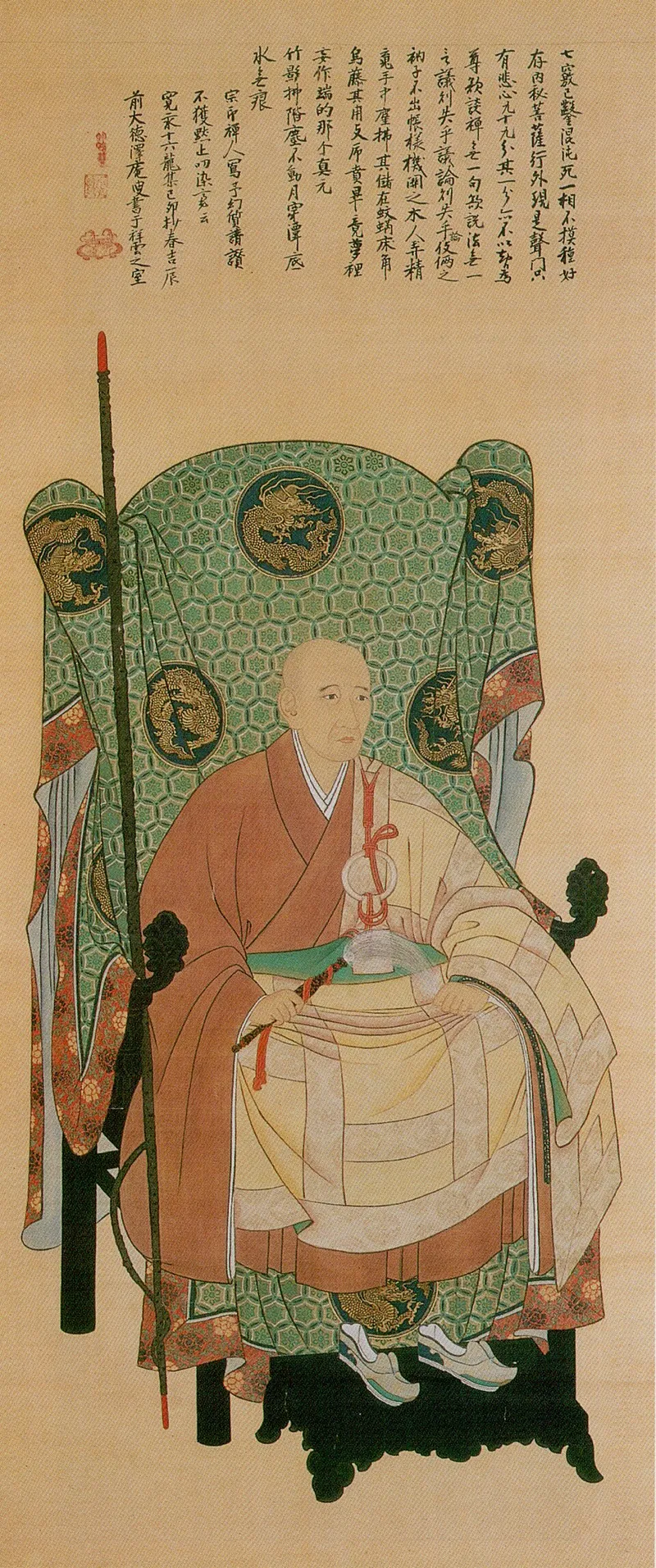
Takuan Sōhō
1573 – 1645
Takuan Sōhō (1573–1645) was a Rinzai Zen master, calligrapher, painter, poet, and tea master whose writings on the relationship between Zen and martial arts profoundly influenced Japanese warrior culture. He became abbot of Daitoku-ji in Kyoto at the remarkably young age of thirty-six. When the Tokugawa shogunate imposed new regulations restricting the authority of Zen temples in 1627, Takuan publicly defied the edict, was arrested, and was exiled to the remote province of Dewa for three years — an experience he bore with equanimity and even humor, continuing his practice and artistic work throughout.
Takuan is best known for his letter to the swordsman Yagyū Munenori, later published as "Fudōchi Shinmyōroku" (The Unfettered Mind), which applies Zen principles of non-attachment and spontaneous response to the art of swordsmanship. His key teaching was that the mind must not "stop" or fixate on any single point — not on the opponent's sword, not on one's own technique, not even on the desire to win — but must flow freely and respond to circumstances without deliberation. This teaching influenced not only martial arts but the entire Japanese aesthetic of mushin (no-mind) that pervades tea ceremony, calligraphy, and the performing arts. The pickled radish known as takuan-zuke is traditionally named after him, a reminder that this sophisticated master was also a man of earthy practicality.
Master Record Sources
No citations attached yet.