Vạn Hạnh
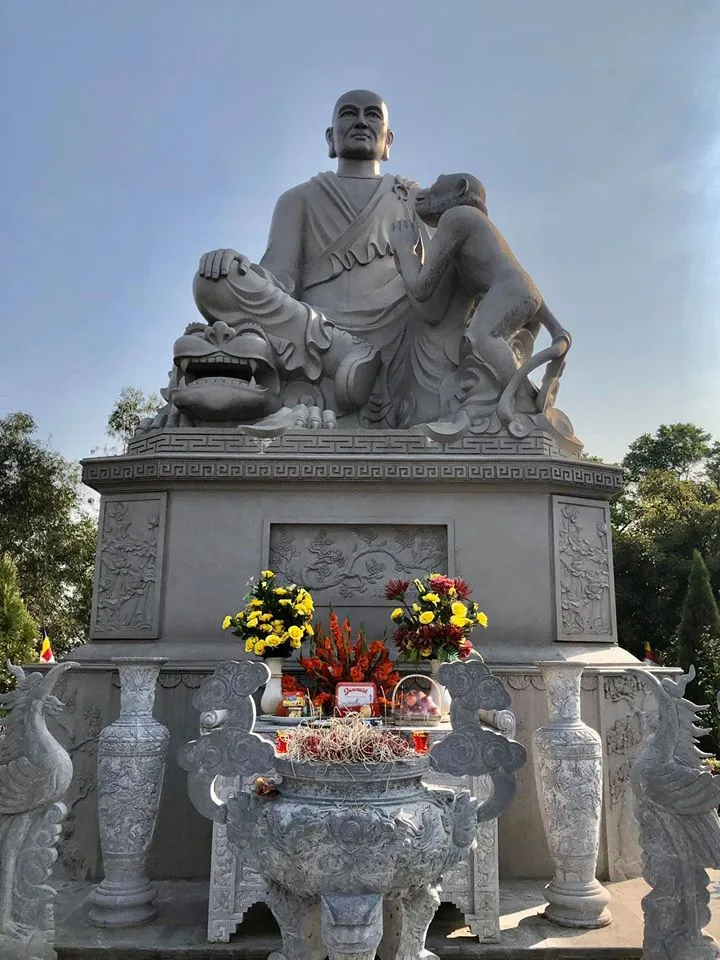
Vạn Hạnh
938 – 1018
Vạn Hạnh (萬行, 938–1018) is the twelfth-generation master of the Tỳ-ni-đa-lưu-chi (Vinītaruci) line of Vietnamese Thiền and one of the most consequential political-religious figures in Vietnamese history[1]. Trained at Lục Tổ Temple in Bắc Ninh, he was renowned for his mastery of the three traditional 'studies' — Buddhism, Confucianism, and Daoism — and for what the chronicles describe as a strikingly accurate gift of prophecy[1]. His most celebrated act was political: foreseeing the imminent fall of the Lê dynasty, he persuaded the court official Lý Công Uẩn to accept the throne in 1009, founding the Lý dynasty (1009–1225) which would shape Vietnam for two centuries and establish Buddhism as the de facto state religion. Vạn Hạnh's death-verse, recorded in the Thiền Uyển Tập Anh, articulates the impermanence at the heart of his teaching: 'The body is like a flash of lightning; here, then gone.'[2]
Names
Teachers and lineage of Vạn Hạnh
Teacher / root master:
Teachings
Flashing lightning is existence; flickering cloud-light is non-existence. The affairs of the world are just like this — do not trouble your heart over their rise and fall. The ten thousand affairs arise and disperse like dew on the morning grass. Power and glory are a single night's dream; do not mistake the dream for the morning.
- dialogueThe Prophecy of the Lý Founder
Vạn Hạnh served as advisor to the courts of Đinh and Tiền Lê. When the power of the Tiền Lê dynasty was failing, Vạn Hạnh said to the general Lý Công Uẩn: 'The omens all point toward you. But kingship is not a prize to seek — it is a burden that falls upon the one who cannot refuse it. Act only when it is undeniable. Do not seize; receive.' Lý Công Uẩn said: 'I am a soldier, not a king.' Vạn Hạnh said: 'A soldier who knows this is already the king that is needed.' When Lý Công Uẩn was crowned and founded the Lý dynasty in 1009, he named Vạn Hạnh as the spiritual father of the new realm. The master replied that the realm and the dharma were one realm and one dharma, indistinguishable at their root.
Vạn Hạnh taught the court nobles: 'You ask me to bless the kingdom so that it will last forever. But I cannot do that, because nothing lasts forever — and the teaching of emptiness is not a teaching of despair. It is a teaching of freedom. When you know that this dynasty, like all dynasties, arises and passes away like lightning, you are freed from the prison of clinging to it. Then you can govern with clear eyes, because you are not governing for eternity — you are governing for this moment, this people, this season. That is what the dharma asks of you: not permanence, but presence.'
Other masters in Thiền
Master Record Sources
- biographyCuong Tu Nguyen — medieval Vietnamese Buddhism scholarship
- politicalLê Mạnh Thát — Vietnamese Buddhist history publications