Bojo Jinul
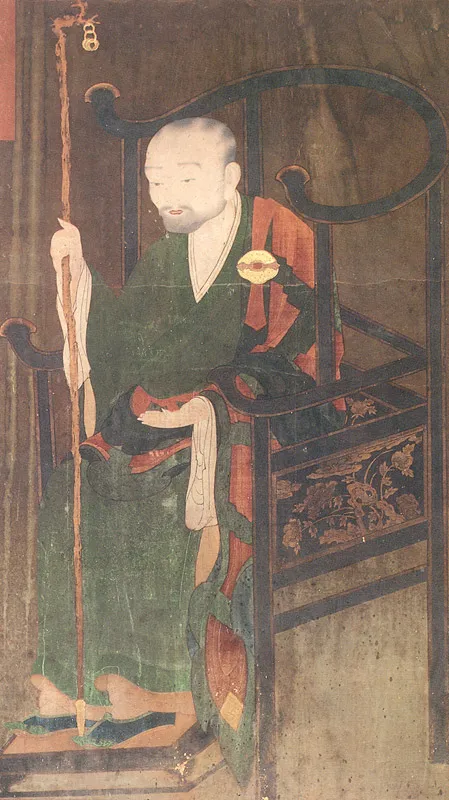
Bojo Jinul
1158 – 1210
Bojo Jinul (1158–1210) was the greatest reformer in the history of Korean Buddhism and the architect of the distinctive Korean Seon synthesis that endures to this day. Born during the Goryeo dynasty, he was ordained at age eight and passed the monastic examinations at twenty-five. His spiritual development was marked by three successive awakenings: the first came while reading the Platform Sutra of the Sixth Patriarch, the second through the Avatamsaka Sutra's teaching on the unobstructed interpenetration of all phenomena, and the third through the writings of the Chinese Chan master Dahui Zonggao on hwadu (keyword) practice.
These three awakenings shaped Jinul's revolutionary synthesis. He integrated Seon meditation with Hwaeom (Avatamsaka) doctrinal study, arguing that sudden awakening must be followed by gradual cultivation — a position he defended against those who insisted on either pure meditation or pure scholarship. He founded the Suseonsa community at Songgwangsa Temple on Mount Jogye, which became the model for Korean monastic practice and gave its name to the Jogye Order, the dominant order in Korean Buddhism today. His key texts, "Encouragement to Practice" and "Secrets on Cultivating the Mind," remain essential reading in Korean monasteries. Jinul's genius lay in his refusal to accept false dichotomies: he demonstrated that awakening and study, sudden insight and gradual cultivation, are not opponents but partners in the life of genuine practice.
Master Record Sources
No citations attached yet.