Jogye
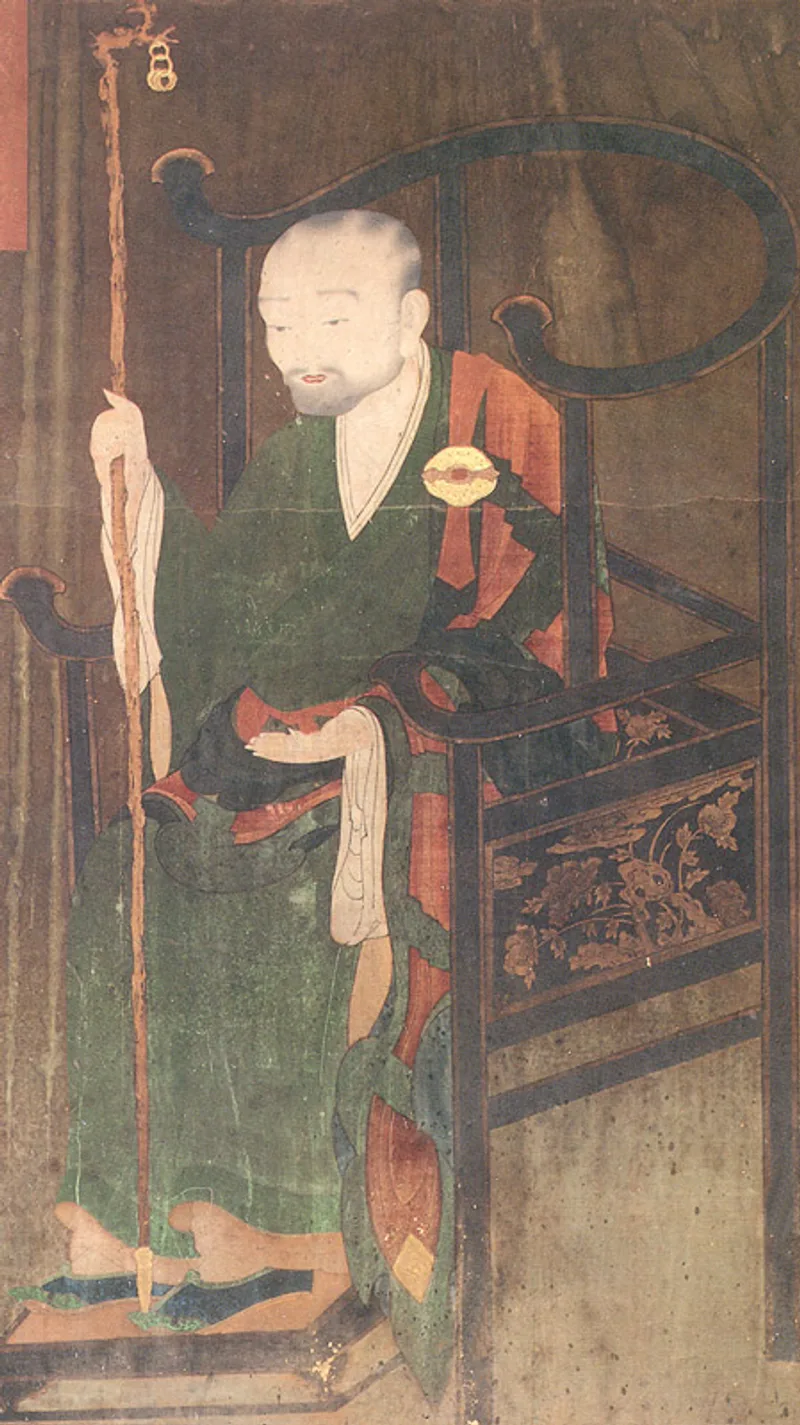
Seon
Jogye
조계종 · 曹溪宗
Branch of Seon
The Jogye Order (조계종, 曹溪宗) is the largest and most influential Buddhist order in Korea, tracing its spiritual lineage to the Sixth Patriarch Huineng's mountain, Caoxi (Jogye in Korean)[1]. Founded in its original form by Bojo Jinul in the twelfth century and reconstituted in the twentieth century after Japanese colonial suppression, the Jogye Order represents the mainstream of Korean Seon practice[1][2]. The order's distinctive approach combines rigorous hwadu (huatou) meditation with monastic discipline, seasonal intensive retreats (kyolche), and the integration of doctrinal study[1]. The Jogye Order maintains over two thousand temples across South Korea and operates the country's major monastic training centers, including Haeinsa, Songgwangsa, and Tongdosa[1]. In the modern era, the order has produced towering figures including Gyeongheo Seongu, who single-handedly revived Korean Seon practice[3]; Mangong, Hyobong, and Gobong, who maintained rigorous meditation standards[4]; and Seongcheol, whose uncompromising insistence on sudden awakening sparked nationwide debate about the nature of enlightenment[5].
Meditation practice
The Jogye Order’s standard practice is hwadu investigation, typically working with ‘What is this?’ (이뭣고) or another critical phrase under a seon master’s guidance[1]. This unfolds most intensely in the seonbang during the twice-yearly summer and winter kyolche, when monastics commit to three months of highly disciplined sitting, walking meditation, and silence[1]. Outside retreat, Jogye training still integrates chanting, bowing, repentance, sutra study, and communal temple labor, so the order does not treat hwadu as a freestanding exercise divorced from monastic formation. The result is a practice culture that joins hard meditative inquiry to the rhythms of large Korean monastic institutions.
Prominent masters
Key texts
- Admonitions to Beginners
'Gye chosim hak-in mun' — the short instruction Jinul wrote for new monks. Read aloud in Jogye monasteries to every new ordinand; the canonical entry to the order.
- Treatise on the Complete and Sudden Attainment of Buddhahood
Jinul's doctrinal synthesis showing how Huayan's perfect-interpenetration teaching grounds Seon's sudden awakening. The theoretical charter of the order's 'ssangsu' (dual-cultivation) approach.
- Song of Realizing the Way
'Odo song' — the awakening verses of the master who single-handedly revived Korean Seon after centuries of Joseon-dynasty suppression. The tradition treats Gyeongheo as the spiritual grandfather of every major 20th-century Jogye teacher.
Key concepts
- Ssangsu
'Dual cultivation' — Jinul's formula for combining meditation (samādhi) and wisdom (prajñā), against the tendency to treat them as alternatives. The distinctive Jogye synthesis of Seon practice with Huayan scholarship.
- Samādhi–Prajñā Society
Jinul's reform community, founded in 1190 and relocated to Mount Jogye in 1200. The historical origin of the Jogye Order as a meditation-centered reform of medieval Korean Buddhism.
- Seonbang
The dedicated meditation hall within a Jogye training temple where kyolche retreats happen. Separated from public temple life; entry is reserved for monks and nuns formally committed to the three-month retreat.
In the words of the masters
- The Mind Is Buddha
Outside of this mind there is no Buddha. Outside of this nature there is no dharma. Look for Buddha apart from your own mind, and you will not find him in a thousand kalpas.
- Sudden Awakening, Gradual Cultivation
Though one has awakened all at once to the same nature as the Buddhas, beginningless habit-energies remain; and so practice must still gradually purify what awakening has already seen.
- Tracing Back the Radiance
Trace back the radiance of your own mind. Do not chase after it outside — there is nothing outside to find.
- What Is This?
Take up the phrase and hold it with great doubt — as if you had swallowed a red-hot iron ball and can neither vomit it out nor swallow it down. When the doubt mass breaks, that is your real face.
- Silence Speaks the Dharma
The sound of the stream in the night valley — that voice has been preaching for thousands of years, and no one has yet heard the end of its sermon.
- Do Not Be Deceived
When an awakening is genuine, it is complete of itself — nothing remains to be accumulated. Do not be deceived by a clear moment and call it the path. Walk the path until the path itself can be set down.
Masters in this branch
Jogye practice centres
South Africa
United States
Sibling branches of Seon
Major works of this school
Sources in use
- The Formation of Ch'an Ideology in China and Korea — Robert E. Buswell
- The Zen Monastic Experience — Robert E. Buswell
- Tracing Back the Radiance: Chinul's Korean Way of Zen — Robert E. Buswell
- The Princeton Dictionary of Buddhism
- Seongcheol Dharma Talks (백일법문)
- Wikipedia - Zen Lineage Charts