Hsuan Hua
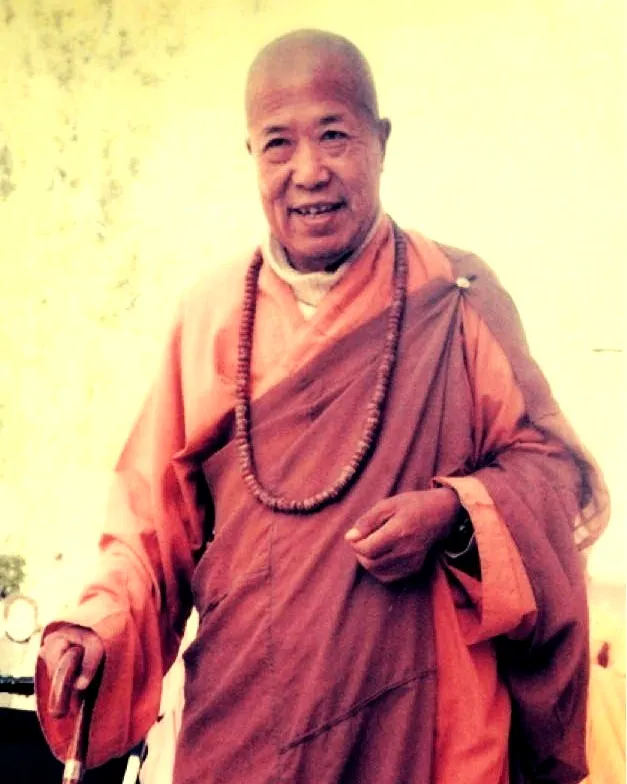
Hsuan Hua
1918 – 1995
Hsuan Hua (1918–1995) was a Chinese Chan master and student of Xuyun who became one of the most influential Buddhist teachers in the American West, establishing a monastic community of unprecedented scope and rigor on American soil. Born Bai Yushu in Shuangcheng, Manchuria, he practiced filial piety to an extreme degree, sitting beside his mother's grave for three years after her death in an act of mourning meditation. He studied under Xuyun at Nanhua Temple and received dharma transmission as a holder of the Guiyang lineage. In 1962, he moved to San Francisco and began teaching in the city's Chinatown.
In 1976, Hsuan Hua founded the City of Ten Thousand Buddhas in Talmage, California, a 488-acre former state hospital that he transformed into the largest Buddhist monastic community in the Western hemisphere. The institution encompassed monasteries for monks and nuns, elementary and secondary schools, a university (Dharma Realm Buddhist University), and a translation center that produced English versions of major Buddhist sutras including the Avatamsaka, Shurangama, and Lotus Sutras. His approach was notable for its strict adherence to the Vinaya precepts — he insisted on vegetarianism, celibacy, and wearing the traditional patched robe at a time when many Asian teachers in America were relaxing such standards. His emphasis on comprehensive Buddhist education, sutra translation, and monastic discipline established a model of traditional Chinese Buddhism in America that continues through the Dharma Realm Buddhist Association.
Master Record Sources
No citations attached yet.