Xuyun
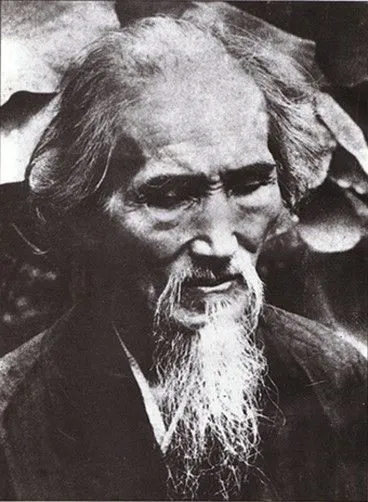
Xuyun
1840 – 1959
Xuyun (1840–1959), whose name means "Empty Cloud," was the most important Chinese Chan master of the modern era and one of the most extraordinary figures in the entire history of Buddhism. Born in Quanzhou, Fujian Province, to a wealthy family, he ordained at age nineteen against his family's wishes and spent the next decades in intense practice and extended pilgrimages, including a famous three-year prostration pilgrimage from Putuo Shan to Mount Wutai, bowing every three steps for over a thousand miles. His awakening came at age fifty-six at Gaomin Temple during an intensive Chan retreat when a cup of boiling water spilled on his hand and shattered his remaining doubts.
Xuyun's subsequent career was devoted to reviving Chan Buddhism across China during a period of catastrophic upheaval. He personally revitalized monasteries of all five houses of Chan — Linji, Caodong, Yunmen, Fayan, and Guiyang — receiving and transmitting lineages in each, a feat unmatched in Chan history. He rebuilt ruined temples, ordained thousands of monks, and reestablished rigorous meditation practice at a time when Chinese Buddhism had fallen into deep decline. During the Communist Revolution, he suffered severe beatings at the hands of Red Guards during the suppression of religion in 1951, at the age of 112, but survived and continued to teach. He is traditionally said to have lived to 119 years of age, though some scholars place his birth later. His disciples, including Hsuan Hua and Sheng Yen, carried Chan Buddhism to the Western world.
Master Record Sources
No citations attached yet.