Tetsugen Dōkō
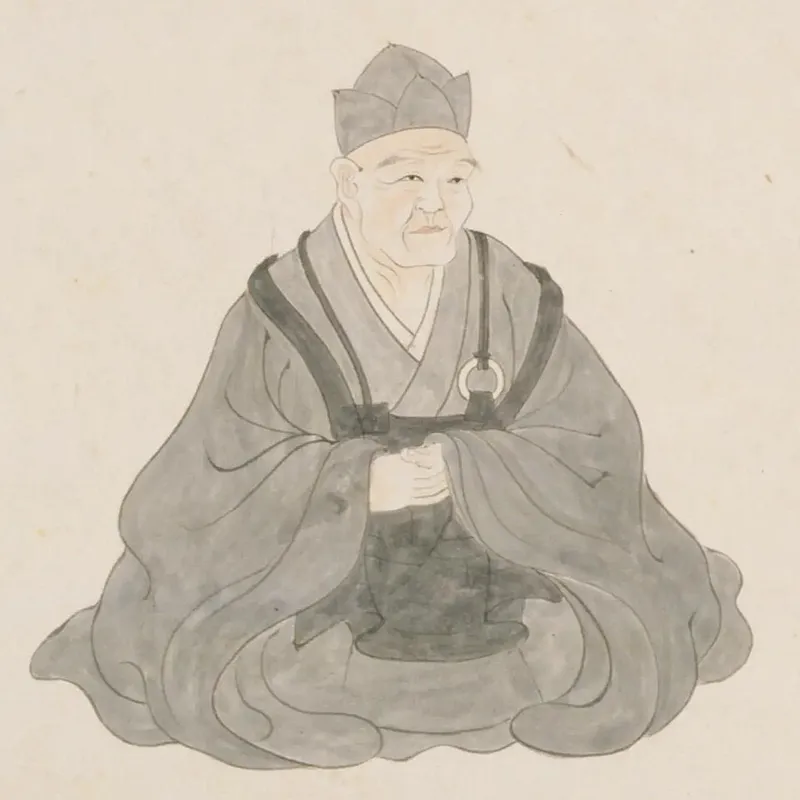
Tetsugen Dōkō
1630 – 1682
Tetsugen Dōkō (1630–1682) was an Ōbaku Zen monk whose life exemplifies the Buddhist ideal of compassion enacted through selfless action. Born in Higo Province (modern Kumamoto), he studied under Ingen Ryūki at Manpuku-ji and became one of the most accomplished masters of the early Ōbaku school. He conceived the monumental project of carving the entire Buddhist Tripiṭaka (the complete canon of Buddhist scriptures) in woodblock for printing — a task requiring the carving of over sixty thousand individual woodblocks.
After years of fundraising across Japan, Tetsugen had collected enough donations to begin the project. But when a devastating famine struck the Osaka region, he gave away all the funds for famine relief. He raised the money a second time, and again a natural disaster struck — this time floods — and again he distributed the funds to the suffering. Only on his third attempt did he finally complete the printing blocks, known as the Ōbaku-ban Daizōkyō (Ōbaku Edition of the Tripiṭaka), which was finished in 1678 and comprised over 6,900 volumes. The Japanese people said that Tetsugen had actually produced three sets of scriptures, and the first two invisible sets — the famine relief and the flood relief — surpassed even the physical canon in merit. His wooden printing blocks are preserved at Manpuku-ji to this day.
Master Record Sources
No citations attached yet.