Kwan Um
Seon
Kwan Um
관음선종 · 觀音禪宗
Branch of Jogye
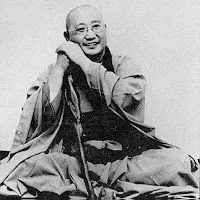
The Kwan Um School of Zen is an international Seon organization founded in 1983 by the Korean master Seung Sahn (1927–2004), who was among the first Korean Zen teachers to establish a major presence in the West[1][2]. The school's name refers to Gwaneum (Avalokiteshvara), the bodhisattva of compassion[2]. Seung Sahn's teaching style combined the rigor of traditional Korean hwadu practice with a direct, humorous, and accessible approach adapted for Western students[1]. His famous kong-an (koan) interviews, often beginning with 'What is this?', became the school's hallmark[3]. The Kwan Um School maintains over a hundred Zen centers and groups across North America, Europe, Asia, and Africa, making it one of the most geographically widespread Zen organizations in the world[2].
Meditation practice
Kwan Um practice centers on kong-an (公案) interviews and Seung Sahn’s teaching of ‘don’t-know mind,’ which reframes traditional hwadu intensity in simple, portable language[3]. Students work with questions such as ‘What is this?’ or ‘What am I?’ in seated practice, but their understanding is regularly tested in kong-an interviews where responsiveness matters more than conceptual explanation. Daily forms usually include zazen, chanting, and 108 prostrations, while Yong Maeng Jong Jin retreats reproduce the concentrated atmosphere of Korean intensive practice in formats accessible to lay communities[2]. The school’s distinctiveness lies in combining traditional Seon rigor with unusually direct and global teaching forms.
Prominent masters
Seung Sahn (1927–2004) trained in Korea under Kobong Sunim, who gave him inka in 1949, making him one of the youngest dharma heirs in modern Korean Buddhism[1]. He arrived in Providence, Rhode Island in 1972 and worked initially in a laundromat before founding the Providence Zen Center, which became the head temple of the Kwan Um School when the international order was incorporated in 1983[1][2]. His senior Western students received transmission as Ji Do Poep Sa Nim (‘Dharma Master’) before the more senior title of Soen Sa Nim (‘Zen Master’); among the most prominent are the late Zen Master Su Bong (Mu Deung Sunim, 1943–1994), Zen Master Wu Kwang (Richard Shrobe), Zen Master Bon Soeng (Jeff Kitzes), and Zen Master Bon Yeon (Jane Dobisz)[2]. Many of Seung Sahn’s root teachers and contemporaries — including Mangong Wolmyeon and Hyobong Sunim — appear in the broader Korean Seon tradition that Kwan Um inherits[4].
Key texts
- Dropping Ashes on the Buddha
The book that introduced Seung Sahn's teaching to English-reading practitioners — letters, kong-an exchanges, and stories in his characteristic blunt, playful style. The classic entry to Kwan Um.
- The Compass of Zen
Seung Sahn's systematic overview — the Three Essentials, the Ten Gates of Kwan Um kong-an training, and his 'great question, great doubt, great courage' formula. The school's definitive textbook.
- Only Don't Know
Seung Sahn's teaching letters to students around the world — a generous sampler of how the school applies 'don't-know mind' to everyday life, relationship, work, and illness.
Key concepts
- Don't-know mind
Seung Sahn's signature phrase — the non-conceptual openness before a kong-an resolves into an answer. Treated as identical to buddha-mind, and as the one thing every Kwan Um student is asked to keep.
- Ten Gates
Seung Sahn's simplified koan curriculum — ten representative kong-ans that unfold the school's core insights. A student's path moves systematically through these gates in teacher interview.
- Yong Maeng Jong Jin
'Fierce, courageous, sustained practice' — the school's intensive retreat form (typically 3 or 7 days), adapted from Korean kyolche for a lay Western sangha. Early-rising, long zazen, kong-an interviews, 108 prostrations.
In the words of the masters
- Only Don't Know
Before thinking, what are you? Keep that question. Don't know — that mind is clear like space. In the don't-know, all beings are already saved.
- Just Do It
When you eat, just eat. When you sit, just sit. When you read this, just read it. Do not save anything for later — there is no later.
- Vow Before Wisdom
First the great vow, then the great doubt, then the great courage. Wisdom is the smallest of these; without the vow, wisdom is only cleverness.
- Open Mouth, Already a Mistake
Open your mouth, already a mistake. So why do I speak? Because the mistake is sometimes the medicine.
- Three Kinds of Students
First-class student: hears one word, gets it, goes to work. Second-class student: hears one word, asks ten more, gets it, goes to work. Third-class student: hears ten words, takes notes, never goes to work. Be the first kind, even on the days you are the third.
- Throw It All Away
Whatever you have, throw it away. Then whatever throws it away, throw that away too. When there is nothing left to throw, you have arrived where you always were.