Taego Order
Seon
Taego Order
태고종 · 太古宗
Branch of Seon
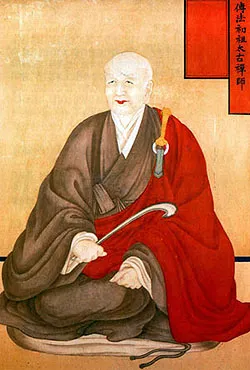
The Taego Order (太古宗, 태고종) is the second largest Buddhist order in Korea, tracing its lineage to Taego Bou (1301–1382), a Goryeo dynasty master who received dharma transmission in the Linji lineage from the Chinese master Shiwu Qinggong (Stonehouse)[1]. Unlike the celibate Jogye Order, the Taego Order permits married clergy, a practice that became widespread during the Japanese colonial period (1910–1945) when Japanese Buddhist customs were imposed on Korean monastics[2]. After Korean independence, the Buddhist community split over the issue of married clergy, with the celibate monks reconstituting as the Jogye Order and the married clergy organizing as the Taego Order[2]. Despite this institutional distinction, both orders maintain the same fundamental Seon practice tradition rooted in hwadu meditation.
Meditation practice
The Taego Order practices the same core hwadu meditation as the Jogye Order, investigating a critical phrase under a teacher’s guidance until discriminating thought weakens and direct knowing becomes possible[2]. Its distinctive feature is not a different meditation method but a different institutional setting: because married clergy are permitted, rigorous Seon practice is often integrated with parish life, ritual duties, and family responsibilities. This gives Taego training a more visibly pastoral and public form while retaining the same Linji-derived contemplative backbone. The order therefore preserves classical Korean Seon methods in a clergy model that differs sharply from Jogye celibate monasticism.
Prominent masters
Key texts
- Record of Taego
The sayings and poems of the Goryeo master who carried the Chinese Linji lineage of Shiwu Qinggong into Korea. The founding document of the order that takes his name.
Key concepts
- Married clergy
The institutional feature that distinguishes the Taego Order from the celibate Jogye Order: permissible since Korean Buddhism reorganized after the Japanese colonial period, during which Japanese household-priest norms had spread.
- Taego–Shiwu lineage
The direct Linji transmission from Shiwu Qinggong (Stonehouse) in China to Taego Bou in 14th-century Korea. Treated by the Taego Order as the orthodox line of Korean Seon.
In the words of the masters
- Five Houses, One River
The five houses of Chan are five fords on one river. Cross at any of them and you reach the same farther shore. Argue about which ford is best, and you stand on this side until you die.
- The Pure Rule for One Person
The Pure Rule of the assembly was written for many; the pure rule for one person is written every morning before the bell. Fold the robe straight, sweep the cloister, sit.
- King and Monk
The king came to ask about the dharma. I said: take off the crown for an hour, and your question will answer itself. He laughed; I laughed. The hour passed, and we both stood up changed.
- No Back, No Front
When you face the cushion, the cushion is in front. When you face the marketplace, the marketplace is in front. The seat that has no back and no front is the one you carry between them.
- Mountain of Gold, Mountain of Mist
If a mountain of gold stood at the door, students would line up to climb it. A mountain of mist costs nothing, contains nothing, and only the sincere try to enter it.
Masters in this branch
Taego Order practice centres
South Korea
Sibling branches of Seon
Sources in use
- The Formation of Ch'an Ideology in China and Korea — Robert E. Buswell
- The Zen Monastic Experience — Robert E. Buswell