Seon
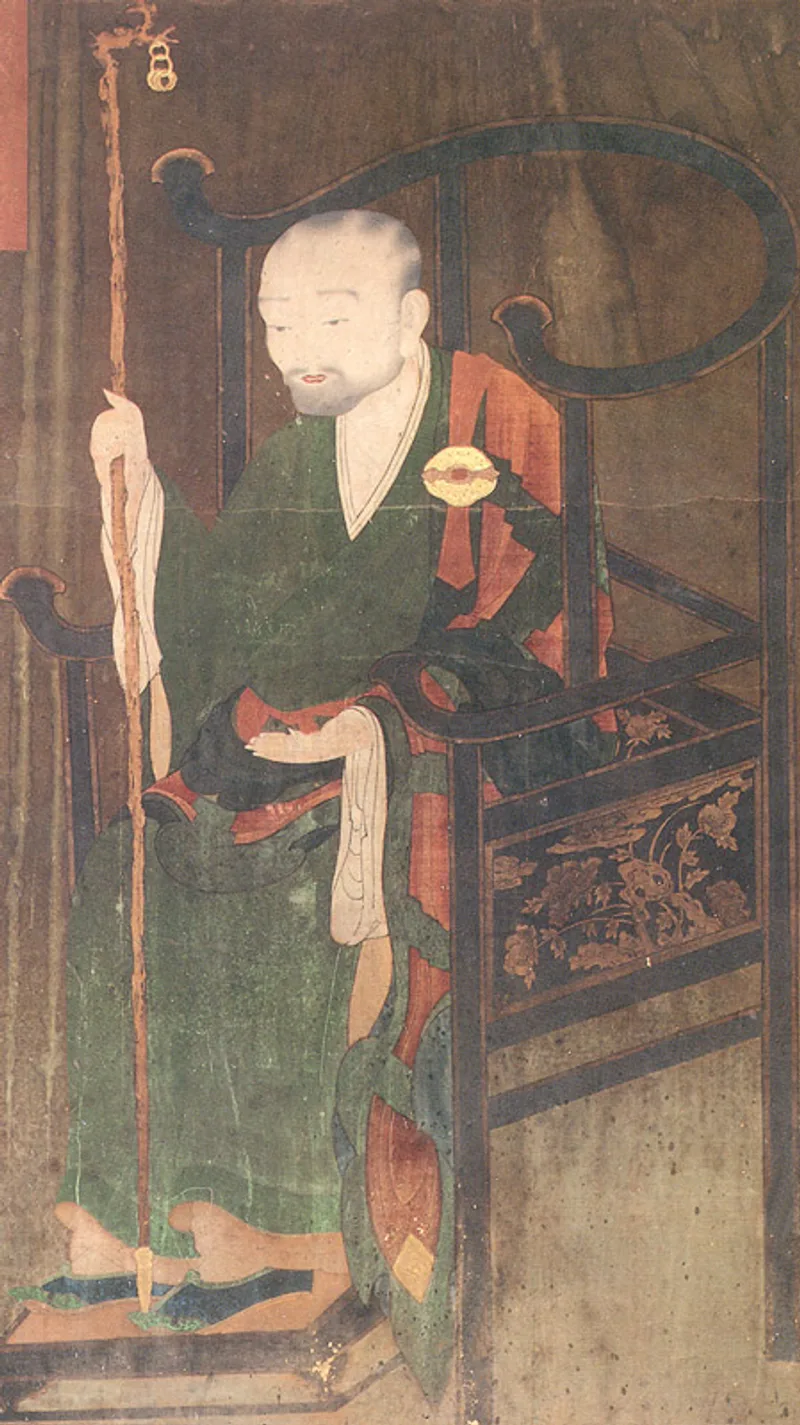
Seon
Seon
선 · 禪
Branch of Chan
Seon (禪, 선) is the Korean tradition of Chan Buddhism, introduced to the Korean peninsula beginning in the seventh century by monks who had studied in Tang dynasty China[1]. The earliest transmissions came through figures like Toui, who received dharma transmission from Baizhang Huaihai's lineage and established the first Seon school upon returning to Korea[2]. During the Goryeo dynasty, Bojo Jinul (1158–1210) became the tradition's most influential reformer, synthesizing Seon meditation with Hwaeom (Huayan) doctrinal study and establishing the Jogye Order, which remains the dominant Buddhist institution in Korea today[3]. Korean Seon developed a distinctive character: it preserved the intensity of Tang dynasty Chan practice—particularly the hwadu (huatou) method of koan investigation—while integrating it with a broader Buddhist framework[1]. The tradition also maintained a strong emphasis on extended silent retreat, culminating in the modern Korean practice of three-month intensive meditation seasons (kyolche)[1]. Major modern figures include Gyeongheo, who revived the dying Seon tradition in the late nineteenth century[4], and Seongcheol, who insisted on sudden awakening as the only authentic path[5].
Meditation practice
Korean Seon preserves hwadu (話頭) investigation as its defining method: the practitioner takes up a living question—most often ‘What is this?’ (이뭣고)—and sustains it through sitting, walking, chanting, and daily activity until the questioning penetrates beneath conceptual thought[1]. The hallmark of Seon training is intensity over discursiveness, especially in the kyolche (結制) retreat system, where monastics enter long seasonal periods of near-continuous meditation under strict discipline. Yet Seon has never been only technique: the tradition also frames practice through the long debate over sudden awakening and subsequent cultivation, from Jinul’s dono jeomsu to Seongcheol’s insistence on pure sudden awakening[3][5]. In this way, Korean Seon combines rigorous meditative inquiry with sustained reflection on what awakening actually means.
Prominent masters
Key texts
- Secrets on Cultivating the Mind
'Susim Gyeol' — Jinul's concise manual arguing that all beings already possess buddha-nature and that practice is to recognize it and then cultivate that recognition. The foundational Korean Seon pedagogical text.
- Excerpts from the Dharma Collection and Special Practice Record
Jinul's systematic synthesis of Huayan doctrine, Heze Shenhui's sudden-awakening teaching, and Dahui's hwadu method. The single most important text for understanding the distinctive Korean Seon synthesis.
- Mirror of Seon
'Seonga Gwigam' — the most widely studied Korean Seon text after Jinul. A distilled manual of Seon practice that shaped centuries of monastic training and remains standard reading today.
- Sermons of Seongcheol
'One Hundred Days of Dharma Talks' — Seongcheol's uncompromising argument that dono jeomsu (sudden awakening–gradual cultivation) is incorrect and that only sudden-awakening–sudden-cultivation (dono donsu) matches the orthodox Chan tradition. Reshaped modern Korean Seon.
Key concepts
- Hwadu
The Korean pronunciation of huatou. The central meditative instrument of Korean Seon — a critical phrase taken up until it becomes an irreducible point of questioning.
- Imwotgo
'What is this?' — the characteristic Korean hwadu, a pure-vernacular rendering that avoids classical-Chinese baggage. Jinul-derived and used across modern Seon halls.
- Dono jeomsu vs. dono donsu
The central doctrinal debate of Korean Seon: 'sudden awakening, gradual cultivation' (Jinul's orthodoxy) versus 'sudden awakening, sudden cultivation' (Seongcheol's reform). Still actively contested.
- Kyolche
The three-month 'gathering the bonds' retreat held twice a year (summer and winter) in Korean Seon monasteries — the characteristic institutional form of Korean intensive practice.
In the words of the masters
- Hold the Phrase Like a Mosquito Biting Iron
Work on the critical phrase as a mosquito works on an iron ox — at a point where it cannot sting, let it bore in with its whole body. In one instant, body and life fall away together.
- Three Bodies, One Sword
Doctrine is the dharma body, meditation is the reward body, conduct is the manifestation body. The Sŏn student wields all three with one sword — and the sword cuts only delusion, never the dharma.
- Warrior-Monk
A monk who takes up the bow does not become a soldier; he becomes a monk in armour. The arrow loosed from the dharma is the first one; the second is the body that loosed it. Both must return to the bow.
- Three Religions, One Mind
Confucius works on the village; Laozi works on the body; the Buddha works on the mind. Where the three meet, no priest is needed — the work is already done.
- An Empty Temple
An empty temple is not a failed temple. The bell still rings on the empty hour, and the monks on the road carry the temple inside their robes.
- After the Mosquito Has Bored In
After the mosquito has bored into the iron ox, the question becomes: where is the mosquito now? Find that mosquito, and the iron ox stands up and walks.
Masters in this branch
Sibling branches of Chan
Major works of this school
Sources in use
- The Formation of Ch'an Ideology in China and Korea — Robert E. Buswell
- The Zen Monastic Experience — Robert E. Buswell
- Kihwa's Hyŏnjŏng-non — A. Charles Muller translation
- The Princeton Dictionary of Buddhism
- Terebess Asia Online - Zen Encyclopaedia
- Wikipedia - Zen Lineage Charts