Gyeongheo Seongu
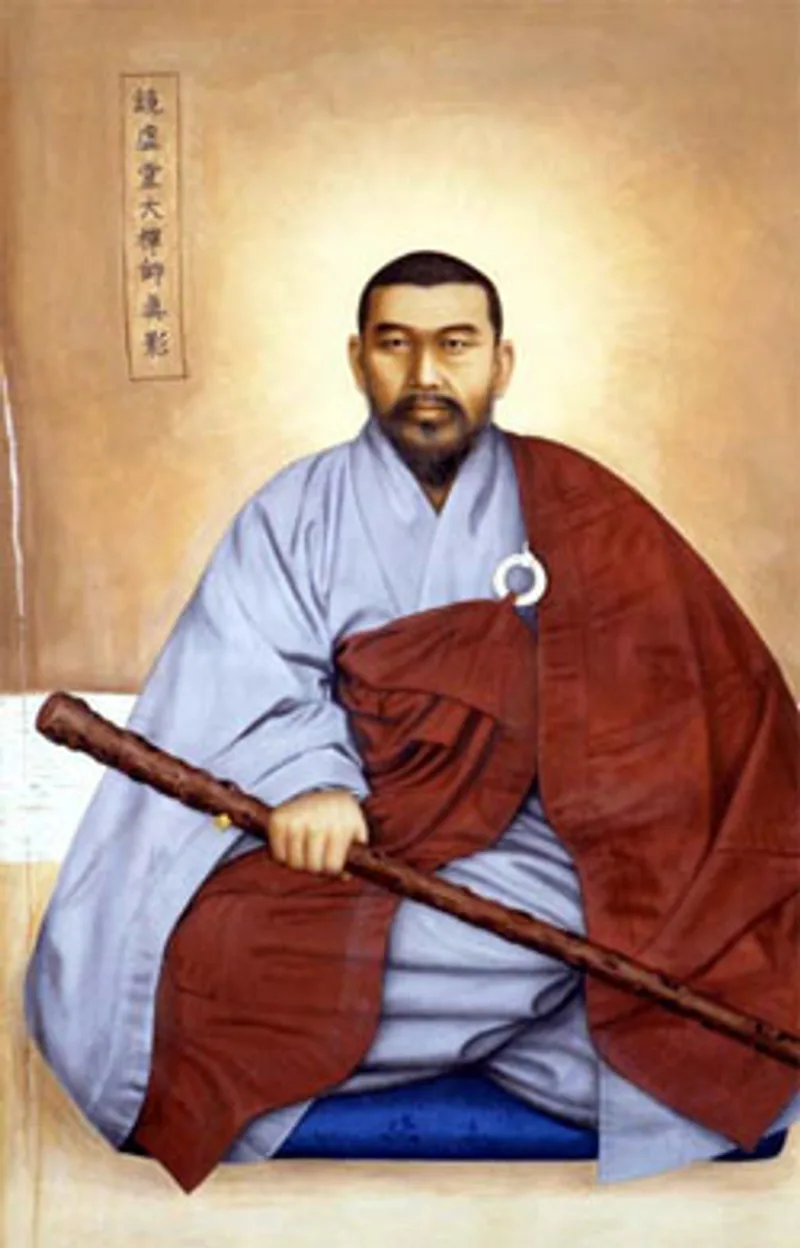
Gyeongheo Seongu
1846 – 1912
Gyeongheo Seongu (鏡虛惺牛, 1846–1912) single-handedly revived Korean Seon practice at the close of the Joseon dynasty, when centuries of state suppression had reduced disciplined meditation to a remembered form[1]. A precocious scholar-monk, he had a breakthrough awakening in 1879 at Cheonjang-sa while reading about illness and death, and spent the rest of his life travelling between monasteries reinstating the seonbang (meditation hall) and the biannual three-month retreat schedule (kyolche)[1]. His principal dharma heirs — Mangong, Hyobong, Hanam, and others — carried the revived tradition into the twentieth century and made the modern Jogye Order, Seongcheol's orthodoxy, and Seung Sahn's international mission all possible[1].
Names
Disciples of Gyeongheo Seongu
Teachers and lineage of Gyeongheo Seongu
Teacher / root master:
Teachings
On the road to Donghak-sa, Gyeongheo arrived at a village that cholera had emptied of the living. He had been teaching sutras with the confidence of a scholar; now he stood in a village of the dead, and every teaching he knew fell away. He returned to Cheonjang-sa and sat before the phrase: 'A man without nostrils is led about by a bull.' Three days passed. On the third day the mass of doubt broke, and he composed a verse: 'I had heard that yellow-faced Gautama could save all living beings from suffering. But today I see that the true saving is the very suffering itself — nothing is left out.' From that night he abandoned the lectern and travelled from monastery to monastery restoring the meditation halls that three centuries of suppression had closed.
- proverbNo Need to Leave the World
When the world is on fire, monks discuss whether to leave it. While they discuss, the world goes on burning. Sit down where you are; the fire becomes light, and the light shows the road.
- proverbReviving What Never Died
Some say I revived the Korean Sŏn. The Sŏn was never dead; only the people sleeping in front of it were. To revive them was simpler than they thought, and harder than I thought.
- proverbCholera and the Mountain
When the cholera came, I went into the village instead of the mountain. The mountain has been there a thousand years; it can wait. The dying cannot.
I have eaten at the table of the king and at the table of the leper. The mouth that opened was the same mouth, and what entered it became the same body of the Way.
- proverbSermon of the Meadow
The meadow has not asked any of these wildflowers to bloom. The wildflowers have not asked the meadow to hold them. So a teacher and a student are when nothing is asked.
Other masters in Seon
Master Record Sources
- biographyThe Zen Monastic Experience — Robert E. Buswell