John Daido Loori
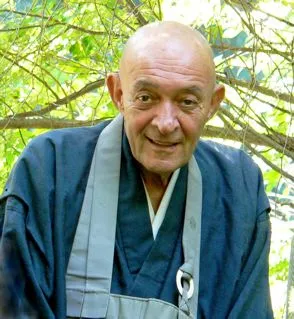
John Daido Loori
1931 – 2009
John Daido Loori (大道, 14 June 1931 – 9 October 2009) was born in Jersey City, New Jersey, into an Italian-American Catholic family. He served in the United States Navy from 1947 to 1952, afterwards studied at Rutgers, and worked for two decades as a research chemist in the food industry; throughout that period he pursued serious black-and-white photography, eventually studying with Minor White, whose Zen-influenced approach to seeing strongly shaped Loori's later teaching on art practice. He began formal Zen practice in 1972 under the Rinzai master Soen Nakagawa Roshi at the New York Zendo Shoboji, then trained intensively in California with Taizan Maezumi at the Zen Center of Los Angeles. Maezumi ordained him as a Zen priest in 1983 and gave him Sōtō dharma transmission in 1986; he later received Rinzai inka in the Soen Nakagawa line in 1997, making him a holder of both major Japanese streams[1].
In 1980 Loori took possession of a former Catholic and Lutheran retreat property on 230 wooded acres along the Esopus Creek in Mt. Tremper, New York, and founded Zen Mountain Monastery, which became the head temple of the Mountains and Rivers Order he established the same year. The MRO's training matrix is the Eight Gates of Zen: zazen, study with a teacher, Buddhist study, liturgy, right action, art practice, body practice, and work practice — a structure designed, in Loori's words, to ensure that 'spiritual practice must move off the cushion' and to give equal dignity to formal sitting, the Zen arts, and engaged daily life. He also founded Dharma Communications, the order's not-for-profit publishing and media arm, which produces the quarterly *Mountain Record* and the books, audio, and film through which his teaching reached a wide audience[2].
Loori's published works are unusually extensive for an American Zen teacher. They include *The Eight Gates of Zen: A Program of Zen Training* (Dharma Communications, 1992; Shambhala expanded edition, 2002), *The Heart of Being: Moral and Ethical Teachings of Zen Buddhism* (Tuttle, 1996), *Two Arrows Meeting in Mid-Air: The Zen Koan* (Tuttle, 1994), *Invoking Reality: The Moral and Ethical Teachings of Zen* (Shambhala, 2007), *Sitting with Koans* (Wisdom, 2006), *The Zen of Creativity: Cultivating Your Artistic Life* (Ballantine, 2004), *Riding the Ox Home: Stages on the Path of Enlightenment* (Shambhala, 2002), *Cave of Tigers: The Living Zen Practice of Dharma Combat* (Dharma Communications, 2008), the photographic monograph *Making Love with Light* (Dharma Communications, 2000), and his edition of Keizan's koan collection *The True Dharma Eye: Zen Master Dōgen's Three Hundred Koans* (Shambhala, 2005), translated with Kazuaki Tanahashi. He gave dharma transmission to Bonnie Myotai Treace (1996), Geoffrey Shugen Arnold (1997), and Konrad Ryushin Marchaj (2009); Shugen Arnold succeeded him as abbot of Zen Mountain Monastery and head of the Mountains and Rivers Order. Loori died of lung cancer at Zen Mountain Monastery on October 9, 2009[3].
Names
Teachers and lineage of John Daido Loori
Teacher / root master:
Teachings
- proverbThe Eight Gates
Zazen, study, liturgy, art practice, body practice, work practice, the precepts, and right action — eight gates leading to one yard. Walk through each at your own pace.
- proverbMountain and Monastery
The mountain has been at this practice longer than any teacher in the building. When the bell rings, listen for the way the mountain sits beneath it.
- proverbCamera as Cushion
Photographing the river, I sat with the river for hours. The shutter clicked once. The picture was good; the morning was the practice.
- proverbKoan and Creativity
Painting, calligraphy, theater — each can be a koan if you let the work cut you. The cut is not destruction; it is the doorway through which you stop being separate from the work.
Other masters in White Plum Asanga
Master Record Sources
- biographyWikipedia - Zen Lineage Charts