Dōgen
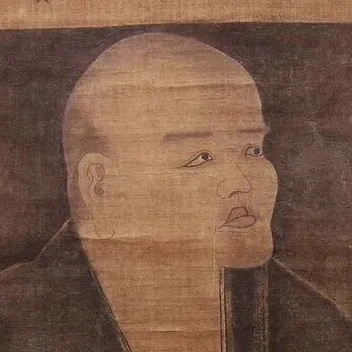
Dōgen
1200 – 1253
Eihei Dogen was the founder of the Soto school of Zen in Japan and one of the most profound religious philosophers in world history[1]. Born into a noble family in 1200, he entered the monastery as a child and came to question why, if all beings are originally endowed with Buddha nature, they still need to practice. Unable to find a satisfying answer in Japan, he traveled to China in 1223 and studied with Tiantong Rujing, under whom he experienced the moment of "dropping off body and mind."[2] He returned to Japan in 1227 and spent the rest of his life teaching, writing, and establishing the Soto monastic tradition[3].
Dogen's masterwork, the Shobogenzo (Treasury of the True Dharma Eye), is a collection of fascicles that approach the fundamental questions of Buddhist philosophy—time, being, impermanence, the body, language, and awakening—with extraordinary depth and originality[4]. His core teaching is that practice and realization are not separate: to sit in zazen is itself the expression of Buddha nature, not a means toward it. His instruction for zazen, the Fukanzazengi, remains the definitive guide to Soto sitting practice[5]. The teaching of shikantaza—"just sitting"—points to a quality of wholehearted, non-striving presence that Dogen considered the complete expression of awakening itself.
Names
Disciples of Dōgen
Teachers and lineage of Dōgen
Teacher / root master:
Works
Dōgen's central work: a collection of 95 fascicles composed between 1231 and 1253, written in vernacular Japanese rather than classical Chinese. Each fascicle is a stand-alone meditation on practice, perception, language, or doctrine — Genjōkōan, Bendōwa, Uji, Sansuikyō, Busshō, and others have circulated independently for centuries. The text is the foundational scripture of Sōtō Zen and one of the most commented-on works of medieval Japanese Buddhism.
Dōgen's earliest extant work and his foundational practice manual, drafted in 1227 shortly after his return from China and revised in 1233. In a few hundred characters it lays out the rationale, posture, breathing, and inner orientation of zazen — the seated meditation he treats not as a means to enlightenment but as its very expression. Read in Sōtō zendos worldwide as the canonical "how-to" of shikantaza.
- Eihei KorokuEihei Kōroku (Dōgen's Extensive Record)
A ten-volume record of Dōgen's later teaching at Eihei-ji, compiled by his successors. It collects formal jōdō (Dharma hall discourses), shōsan (informal talks), kōan commentaries, and Chinese-style verse — the documentary counterpart to Shōbōgenzō. The Leighton & Okumura translation makes the full Chinese-language record available in English for the first time.
- Tenzo KyokunTenzo Kyōkun (Instructions for the Cook)
Dōgen's 1237 essay on the vocation of the monastery cook, drawing on encounters with two old tenzos he met in China. Although the surface subject is kitchen work, the text develops Dōgen's account of how attentiveness in everyday tasks is itself the unfolding of practice — and is widely read today outside the monastic context.
- Gakudo YojinshuGakudō Yōjinshū (Points to Watch in Buddhist Practice)
Ten short admonitions for practitioners, composed around 1234. Each point — arousing the way-seeking mind, taking refuge, reading sutras, sitting zazen — is presented as an instruction to be turned over and embodied rather than merely understood. One of the most accessible entry points into Dōgen for new practitioners.
Teachings
- practice-instructionHow to Sit (Fukanzazengi, opening)
The way is originally perfect and all-pervading. How could it depend on practice and verification? The dharma vehicle is free and untrammeled. What need is there for our concentrated effort? Indeed, the whole body is far beyond the world's dust. Who could believe in a means to brush it clean? It is never apart from one, right where one is. What is the use of going off here and there to practice? For sanzen, a quiet room is suitable. Eat and drink moderately. Cast aside all involvements and cease all affairs. Do not think 'good' or 'bad.' Do not judge true or false. Give up the operations of mind, intellect, and consciousness; stop measuring with thoughts, ideas, and views. Have no designs on becoming a buddha.
- proverbNot Aware of Enlightenment
Do not think you will necessarily be aware of your own enlightenment.
- proverbContinuous Practice
Continuous practice, day after day, is the most appropriate way of expressing gratitude.
- proverbFlowers Fall, Weeds Spring
Flowers fall amid our longing; weeds spring up amid our aversion. Both belong to the same garden, and the garden does not consult us about its arrangement.
Firewood becomes ash, and it does not become firewood again. Yet do not suppose that the ash is after and the firewood before. You should understand that firewood abides in the dharma position of firewood, which fully includes before and after, and is independent of before and after. Ash abides in the dharma position of ash, which fully includes before and after. Just as firewood does not become firewood again after it is ash, you do not return to birth after death.
Enlightenment is like the moon reflected in water. The moon does not get wet, nor is the water broken. Although its light is wide and great, the moon is reflected even in a puddle an inch wide. The whole moon and the entire sky are reflected in dewdrops on the grass, or even in one drop of water. Enlightenment does not divide you, just as the moon does not break the water. You cannot hinder enlightenment, just as a drop of water does not hinder the moon in the sky.
- sayingTo Study the Self
To study the Buddha Way is to study the self. To study the self is to forget the self. To forget the self is to be enlightened by the ten thousand things. To be enlightened by the ten thousand things is to free one's body and mind, and those of others. No trace of enlightenment remains, and this traceless enlightenment is continued forever.
- sermonBeing-Time (Uji)
An ancient Buddha said, "For the time being, I stand on the highest mountain peak. For the time being, I move along the deepest ocean floor." 'For the time being' here means time itself is being, and all being is time. Each moment is all being, is the entire world. Reflect now whether any being or any world is left out of the present moment. Being-time has the quality of flowing. Today flows into tomorrow, today flows into yesterday. This flowing does not mean that time moves from today to tomorrow. Today is the time of today; yesterday is the time of yesterday. They are not separate, and yet they do not merge.
Firewood becomes ash, and does not become firewood again. Yet do not think that the ash is after and the firewood is before. Firewood abides in its dharma-position as firewood, with its own before and after. Spring does not become summer. We do not say that spring becomes summer. There is spring, and there is summer. Each abides in its own dharma-position completely. This is being-time. Life does not become death. Death does not become life. Life is its own complete moment; death is its own complete moment. They are like winter and spring—we do not say that winter becomes spring, or that spring becomes winter.
- proverbPractice Is Realization
To study the Buddha Way is to study the self. To study the self is to forget the self. To forget the self is to be verified by the ten thousand dharmas.
- proverbThe Time-Being
Time is the thing, and the thing is time. The pine is time; the bamboo is time. To say I am wasting time is to admit you are waiting for time to be elsewhere; it never is.
- proverbFirewood Does Not Become Ash
Firewood does not become ash. Firewood is firewood completely; ash is ash completely. To say one becomes the other is to step over the moment in which each one stands alone.
- proverbFish in Water, Bird in Sky
When the fish swims, the water has no edges for the fish; when the bird flies, the sky has no edges for the bird. Each fully fills its element. So we, when we sit, fill the sitting.
- proverbJust Sit (Shikantaza)
Sit without a single goal. If a goal sneaks in, sit with the goal as another visitor. The sitting that has no purpose is the sitting that completes its purpose.
- proverbMountains Walking
Mountains are walking. Those who do not see this say: how could a mountain walk? Those who see it say: how could a mountain not walk?
- proverbInstructions to the Cook
When you wash the rice, do not separate the work from yourself. Do not separate yourself from the work. Cook with great mind, parental mind, joyful mind. The meal is the dharma; you are the menu.
- proverbBody and Mind Falling Away
Body and mind fall away; fallen-away body and mind. The student who hears this and sets out to make body and mind fall away has reattached them with both hands.
- proverbPainted Rice Cake
Without painted rice cakes, there is no remedy for hunger. The image of awakening is not opposed to awakening; the painting and the eating belong to one kitchen.
- proverbMountains and Rivers Sutra
The blue mountains, the running rivers — these are not the setting for the sutra. They are the sutra. Those who can read in this way do not need a printed page.
Featured in
- Traditional Zen Encounter DialoguesDrop Off Body and Mind!
Other masters in Sōtō
Master Record Sources
Yongping Daoyuan
Caodong
1200-1253
Dogen
Soto
Tiantong Rujing (Shakyamuni Buddha and the Two Founders)