White Plum Asanga
Zen
White Plum Asanga
白梅
Branch of Sōtō
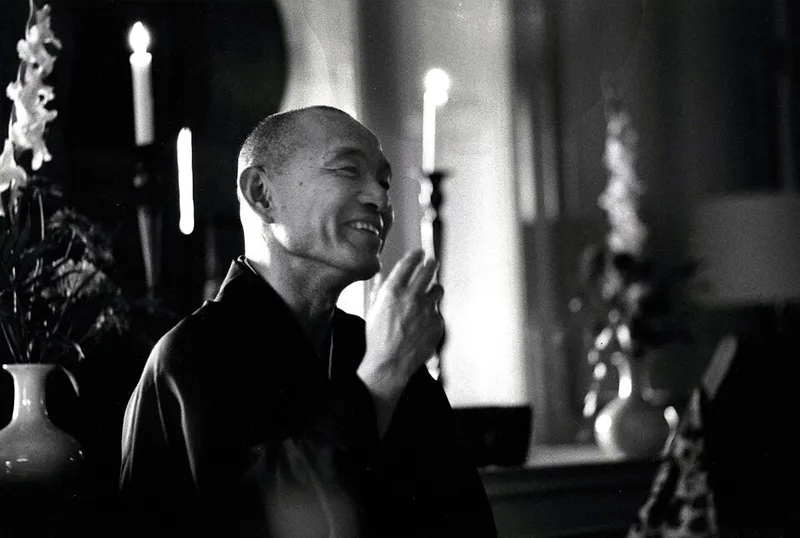
The White Plum Asanga (白梅, 'white plum blossom') is the lineage sangha of Taizan Maezumi Roshi (1931–1995) and his Dharma successors[1]. It is not a Japanese Sōtōshū-registered sub-school but a Western Zen order that inherits Maezumi's tri-lineage authorization: Sōtō shihō from his father Baian Hakujun Kuroda, Rinzai inka from the lay teacher Kōryū Osaka, and Sanbō-Zen inka from Hakuun Yasutani[1][2]. Maezumi named twelve American Dharma heirs — including Bernie Tetsugen Glassman, Charlotte Joko Beck, Dennis Genpo Merzel, John Daido Loori, Jan Chozen Bays, and Gerry Shishin Wick — and through their own transmissions the White Plum now has several hundred authorized teachers and roughly a thousand affiliated practice places worldwide[3]. Because the order combines shikantaza with the Harada-Yasutani koan curriculum, and because it operates outside Sōtōshū registration, most White Plum heirs teach under the Asanga's own name rather than as Sōtō priests.
Meditation practice
White Plum practice reflects Maezumi's triple authorization: shikantaza in the Sōtō sense (zazen as the direct expression of awakening) combined with a formal koan curriculum derived from Harada Daiun Sogaku and Hakuun Yasutani — beginning with the Mu koan, moving through breakthrough koans, and continuing into the Shōyōroku, Mumonkan, Denkōroku, and Hekiganroku[2]. Formal face-to-face interview (dokusan) is central. Many White Plum centers also integrate the social-action emphasis of the Zen Peacemaker Order, which Glassman founded in 1996 within Maezumi's line[4].
Prominent masters
Taizan Maezumi (1931–1995) founded the Zen Center of Los Angeles in 1967 and, by the time of his death, had given Dharma transmission to twelve American successors[1]. Among the best known are Bernie Tetsugen Glassman (1939–2018), founder of Greyston Bakery and the Zen Peacemaker Order[4]; Dennis Genpo Merzel (b. 1944), founder of Kanzeon Sangha[5]; Charlotte Joko Beck (1917–2011), whose ‘Ordinary Mind School’ took her teaching out of the lineage tree[6]; John Daido Loori (1931–2009), founder of Zen Mountain Monastery and the Mountains and Rivers Order[7]; Jan Chozen Bays, co-abbot of Great Vow Zen Monastery; and Gerry Shishin Wick. Through their own transmissions the White Plum now spans several hundred authorized teachers in North America, Europe, and beyond[3].
Key texts
- On Zen Practice
The foundational White Plum teaching volume — Maezumi and senior students on zazen, the kōan curriculum, ritual, and lineage. Reissued by Wisdom Publications as the canonical introduction to the Asanga's approach.
- The Hazy Moon of Enlightenment
Companion volume to On Zen Practice, gathering Maezumi's teachings on the Five Ranks, emptiness, and the post-awakening integration work that distinguishes the White Plum's path after initial kenshō.
- Appreciate Your Life
A posthumous collection of Maezumi's talks edited by his Dharma heir Wendy Egyoku Nakao (Zen Center of Los Angeles). The clearest single volume of Maezumi's own voice.
Key concepts
- Three Tenets
'Not-knowing, bearing witness, taking action' — Bernie Glassman's distillation of Maezumi's teaching into a social-action practice. The working framework of the Zen Peacemaker Order and many White Plum lineage groups.
- Tri-lineage inheritance
The defining White Plum inheritance: each authorized teacher carries Maezumi's Sōtō shihō (via Baian Hakujun Kuroda), Rinzai inka (via Kōryū Osaka), and Sanbō-Zen inka (via Hakuun Yasutani). Most heirs transmit only the Sōtō and Harada-Yasutani koan streams.
Masters in this branch
No masters linked to this school yet.
White Plum Asanga practice centres
United States
Netherlands
Belgium
United Kingdom
Germany
Sources in use
No supporting sources are attached to the linked masters yet.