Minh Hoằng Tử Dung
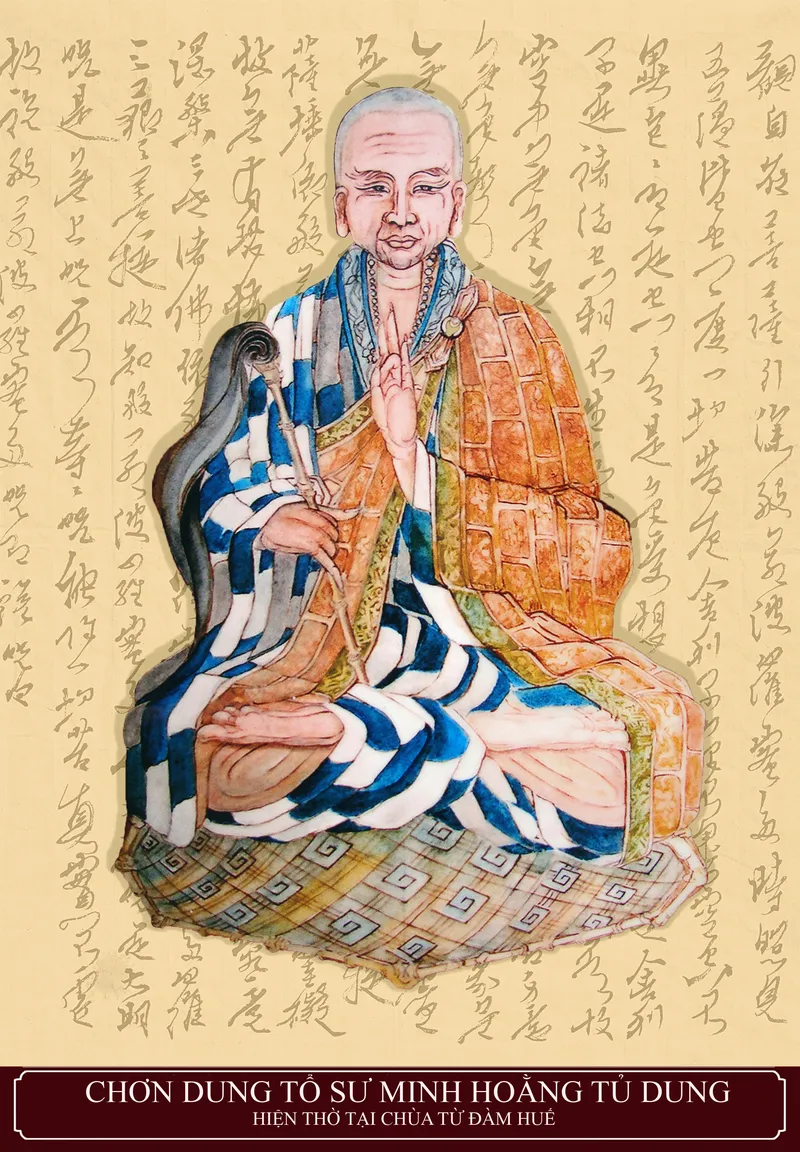
Minh Hoằng Tử Dung
Dates uncertain
Minh Hoằng Tử Dung was a Chinese monk of the thirty-fourth generation of the Linji school who traveled to Vietnam in the late seventeenth century and became one of the most important figures in establishing the Lâm Tế tradition in central Vietnam. He was among the eminent monastics invited by Nguyên Thiều from China, arriving in Thuận Hóa (Huế) during the period of Buddhist revival under the patronage of the Nguyễn lords.
Tử Dung settled at An Tôn Temple (also known as Bảo Quốc Temple) on Hoàng Long Mountain near Huế, where he taught and transmitted the dharma. His most significant student was Liễu Quán (1670–1742), who would found the uniquely Vietnamese Liễu Quán dharma line. When Liễu Quán came to him in 1702, Tử Dung presented the koan: "All dharmas return to the one. Where does the one return to?" After six years of intensive practice, Liễu Quán experienced breakthrough understanding, and in 1712 Tử Dung formally confirmed his enlightenment, making him the thirty-fifth generation heir of the Lâm Tế lineage. Through Liễu Quán, Tử Dung's dharma lineage became the dominant form of Vietnamese Zen Buddhism.
Master Record Sources
No citations attached yet.