Liễu Quán
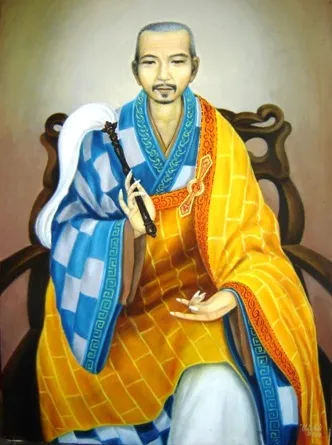
Liễu Quán
1670 – 1742
Liễu Quán (了觀, 1670–1742) is the master who Vietnamized the Lâm Tế (Linji) tradition[1]. Where earlier Vietnamese Lâm Tế transmission had been carried by Chinese émigré monks — notably Nguyên Thiều, who arrived from Guangdong c. 1665 — Liễu Quán was the first Vietnamese-born heir, receiving transmission from the Chinese master Tử Dung Minh Hoằng[1]. The dharma line he established, known as the Liễu Quán branch, became the dominant Buddhist lineage in central and southern Vietnam and remains so today. Thích Nhất Hạnh's Plum Village tradition descends through this line as its 42nd generation, making Liễu Quán the ancestor of the global Vietnamese Zen tradition as it is now practiced worldwide[2].
Names
Disciples of Liễu Quán
Teachers and lineage of Liễu Quán
Teacher / root master:
Teachings
For thirty years the path has been this single phrase: Who is the one who recites the Buddha's name? This morning the phrase asked itself — and the one who recites disappeared. From now on, north, south, east, west: each direction is the gate.
- proverbOne Breath
In one breath, a student of the Way lives and dies a thousand times. The teacher who stays with that breath, neither grasping nor pushing it away, has nothing more to teach.
I went to the mountain to find a master and waited many years. One morning the mountain said: you have become my student already; the looking around for me was the lesson.
Send each disciple to a different province, and the dharma will outlive the teacher. Keep them all in one temple, and the temple will outlive only itself.
- proverbAncestral Question
What is the meaning of the patriarch coming from the west? I answer with a Vietnamese mouth and a Chinese sutra and an Indian silence — and the answer is none of those, and all of them.
- proverbLight from a Bowl of Rice
Eat your bowl of rice slowly enough, and you will see light coming out of it. The student who has not seen this light has not yet eaten — only swallowed.
Other masters in Lâm Tế
Master Record Sources
- biographyCuong Tu Nguyen — medieval Vietnamese Buddhism scholarship
- teachersLê Mạnh Thát — Vietnamese Buddhist history publications