Lâm Tế
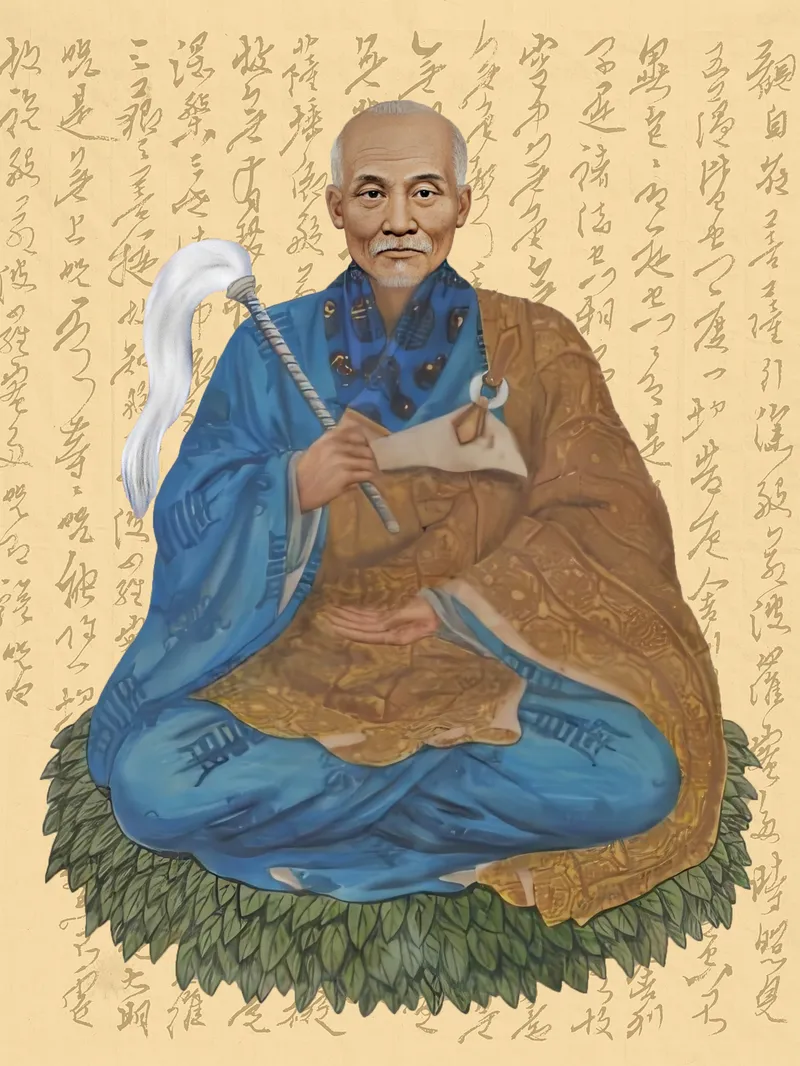
Thiền
Lâm Tế
Lâm Tế · 臨濟宗
Branch of Linji
The Lâm Tế school is the Vietnamese form of the Chinese Linji tradition, formally established in Vietnam during the seventeenth century by Chinese monks carrying the late-Ming Linji revival lineage of Miyun Yuanwu[1]. The most important transmission was through Nguyên Thiều (1648–1728), a Chinese monk from Guangdong who arrived in Vietnam around 1665–1677 and established the Linji lineage in the central and southern regions[2]. His dharma grandson Liễu Quán (1670–1742) became the first native Vietnamese to receive Linji dharma transmission, founding the Liễu Quán dharma line that 'Vietnamized' the tradition and remains the dominant Buddhist lineage in central Vietnam to this day[3]. Thích Nhất Hạnh (1926–2022), the globally influential Zen teacher and peace activist, was the 42nd generation of the Lâm Tế school and 8th generation of the Liễu Quán line[4].
Meditation practice
The Lâm Tế school practices huatou (thoại đầu) investigation in the tradition transmitted from late-Ming Chinese Linji Chan, but adapted to Vietnamese monastic life where chanting, liturgy, and community obligations remain prominent[1]. In the Liễu Quán line especially, meditation is joined to sutra study, repentance ceremonies, devotional chanting, and forms of service rather than isolated from them[3]. This means that insight is cultivated through both concentrated inquiry and a broader temple discipline shaped by Vietnamese Mahayana culture. Thích Nhất Hạnh later drew on this inherited unity of contemplation and engagement when developing his own modern teaching[4].
Prominent masters
Key texts
- Record of Linji
The founding text of the whole Linji/Lâm Tế tradition. Vietnamese Lâm Tế monasteries study the same yulu that shapes Chinese and Japanese Linji/Rinzai practice, read in classical Chinese with Vietnamese commentary.
- Liễu Quán Transmission Verse
The dharma-name generation verse composed by Liễu Quán that standardizes the names of all subsequent masters in his line. The structural backbone of Vietnamese Lâm Tế genealogy to this day.
Key concepts
- Thoại đầu
The Vietnamese form of huatou — the keyword-meditation method inherited from Chinese Linji. In the Liễu Quán line, 'Who drags this corpse around?' is a characteristic phrase.
- Liễu Quán line
The Vietnamese dharma line established by Liễu Quán (1670–1742), the first native Vietnamese to receive Lâm Tế transmission. Dominant in central and southern Vietnam; Thích Nhất Hạnh is its 8th-generation heir.
In the words of the masters
- One Breath
In one breath, a student of the Way lives and dies a thousand times. The teacher who stays with that breath, neither grasping nor pushing it away, has nothing more to teach.
- When the Mountain Becomes the Master
I went to the mountain to find a master and waited many years. One morning the mountain said: you have become my student already; the looking around for me was the lesson.
- Twelve Disciples in Twelve Provinces
Send each disciple to a different province, and the dharma will outlive the teacher. Keep them all in one temple, and the temple will outlive only itself.
- Ancestral Question
What is the meaning of the patriarch coming from the west? I answer with a Vietnamese mouth and a Chinese sutra and an Indian silence — and the answer is none of those, and all of them.
- Light from a Bowl of Rice
Eat your bowl of rice slowly enough, and you will see light coming out of it. The student who has not seen this light has not yet eaten — only swallowed.
Masters in this branch
Lâm Tế practice centres
Vietnam
Spain
Germany
United States
Sibling branches of Linji
Sources in use
- Lê Mạnh Thát — Vietnamese Buddhist history publications
- Cuong Tu Nguyen — medieval Vietnamese Buddhism scholarship
- Wikipedia - Zen Lineage Charts