Nguyen Thieu
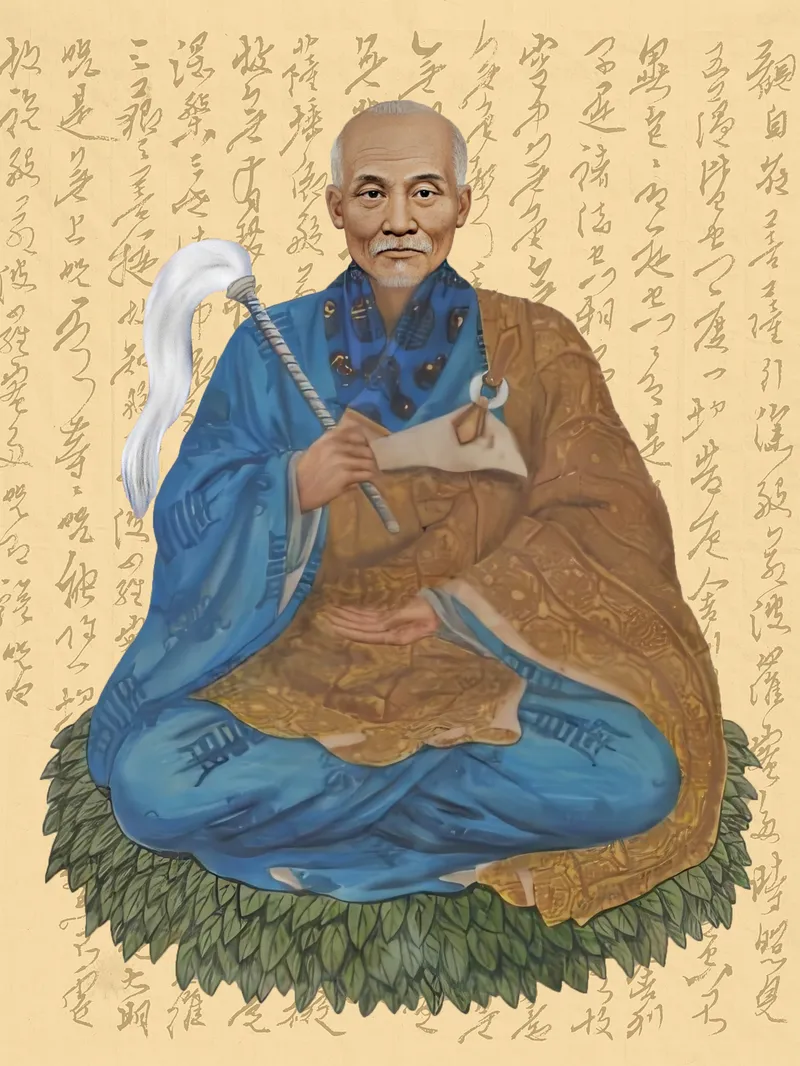
Nguyen Thieu
1648 – 1728
Nguyên Thiều (元韶, 1648–1728) was the Cantonese Linji-Yangqi-line monk who carried the Lâm Tế (Linji) tradition into Vietnam during the late seventeenth century and fundamentally reshaped Vietnamese Buddhism for the next three hundred years[1]. Born in Triệu Châu prefecture in Guangdong, he was ordained at nineteen under Bổn Quả Khoáng Viên (a Dharma heir of Muchen Daomin and so an indirect heir of Miyun Yuanwu), and so stands as the thirty-third generation of the Linji lineage[1].
He travelled to Đàng Trong (the Nguyễn-lord south of Đại Việt) in 1677, arriving during the political upheaval of the Qing conquest of the last Ming loyalists, and was received under the patronage of Lord Nguyễn Phúc Tần. He founded Thập Tháp Di Đà Temple in Quy Nhơn (1683) and later Phổ Thành and Quốc Ân in Thuận Hóa (the Huế region), and around 1687–1690 was sent back to China to invite further monks, scriptures, and ritual implements — returning with several eminent Chinese masters including Minh Hoằng Tử Dung[2]. Through Minh Hoằng Tử Dung's student Liễu Quán, his line produced the Vietnamized Liễu Quán branch that became the dominant Buddhist lineage of central and southern Vietnam and the ancestor of Thích Nhất Hạnh's Plum Village tradition[3].
Names
Teachers and lineage of Nguyen Thieu
Teacher / root master:
Other masters in Lâm Tế
Master Record Sources
1648-1728
Nguyen Thieu
Lam Te