Sengai Gibon
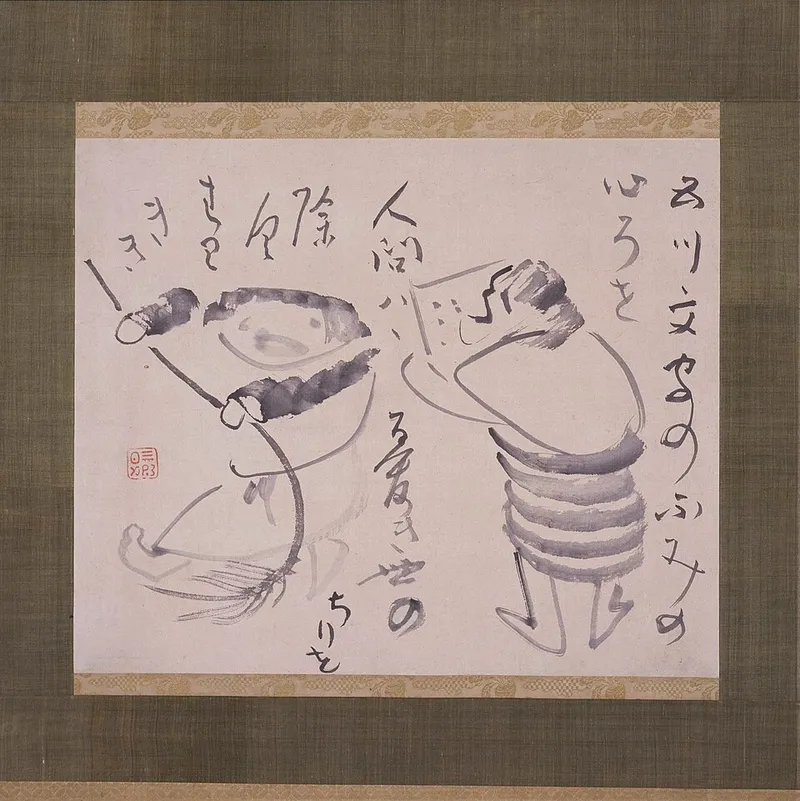
Sengai Gibon
1750 – 1837
Sengai Gibon is recorded in the historiography of the post-Daitō / Myōshin-ji Rinzai transmission lines as a transmission figure in its lineage. The surviving record preserves his place in the line; little distinctive doctrinal material from his teaching is preserved in modern scholarship[1].
Names
Teachers and lineage of Sengai Gibon
Teacher / root master:
Teachings
- sayingCircle, Triangle, Square
The circle, the triangle, the square—these are the universe entire. The square is the earth, solid and stable, the ground beneath your feet. The triangle is the beginning of all forms, the principle by which things arise. The circle is infinite emptiness, boundless and complete, without beginning or end. From emptiness, form arises; from form, the myriad things; and the myriad things return to emptiness. These three brushstrokes contain everything. What more is there to say?
When you drink tea, drink tea. The whole universe is in this cup. The water came from clouds, the clouds from the sea, the sea from the rivers, the rivers from rain. The heat came from fire, the fire from wood, the wood from earth and sun. Take one sip and you swallow the entire universe. But if you are thinking about the universe while you drink, you have missed the tea entirely.
- proverbCircle, Triangle, Square
I painted a circle, a triangle, and a square. Some called this the universe, the dharma, the Buddha. I called it: ink, ink, and a little more ink. The interpretation is the viewer's body.
- proverbOld Man Laughs
An old man laughs at his own paintings, and the paintings do not mind. So practice — laughed at by the years, the practice does not lose its smile.
- proverbThree Friends
Pine, bamboo, plum — three friends of winter. Each holds firm in a different way: the pine by not letting go, the bamboo by bending, the plum by blooming. Choose your way of holding.
- proverbDo Not Leave the Painting
Do not finish a painting and leave it behind. Carry it in your eye. The next painting begins where the last one's ink dries.
Other masters in Rinzai
Master Record Sources
- datesZen Editorial Overlay - Originals Curation
1750-1837
- nameZen Editorial Overlay - Originals Curation
Sengai Gibon
- schoolZen Editorial Overlay - Originals Curation
Rinzai
- teachersZen Editorial Overlay - Originals Curation
Gessen Zenne