Myoan Eisai
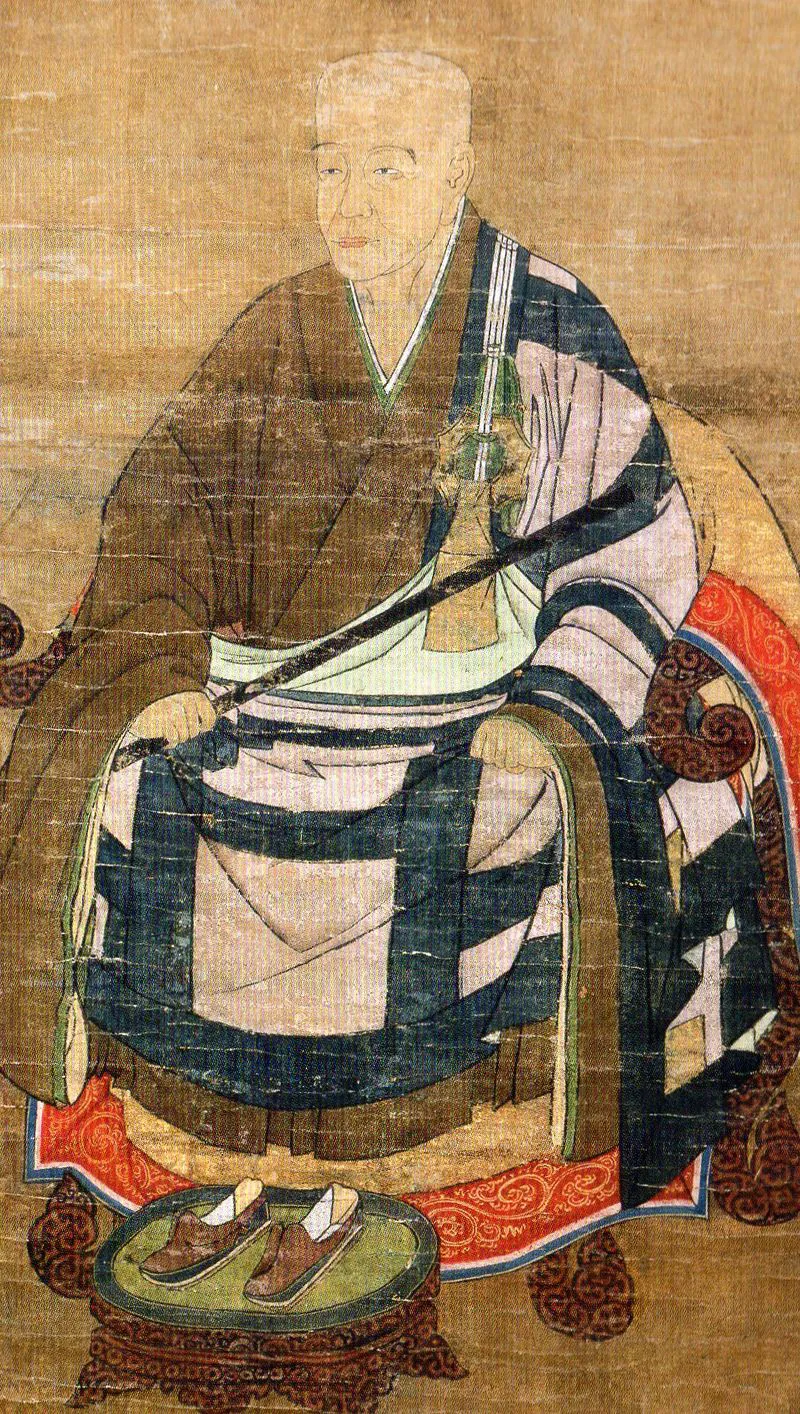
Myoan Eisai
1141 – 1215
Myōan Eisai (明菴榮西, 1141–1215) is the monk traditionally credited with the founding of Japanese Rinzai Zen and with the re-introduction of large-scale tea cultivation to Japan. A Tendai-trained monk who had grown dissatisfied with the state of Heian-period Buddhism, Eisai made two voyages to Song-dynasty China: a brief first trip in 1168 and a longer second residence from 1187 to 1191, during which he trained at Mount Tiantai (天台山) and Mount Tiantong under the Huanglong-line Linji master Xū'ān Huáichǎng (虛庵懷敞), from whom he received Dharma transmission[1]. He returned to Japan in 1191 carrying that Huanglong-line transmission together with tea seeds and the Song methods of preparing powdered (matcha) tea[2].
Eisai's effort to establish Zen as a free-standing school in Japan met sharp resistance from the powerful Tendai establishment on Mount Hiei, which obtained a court ban on the new "meditation school" in 1194. He answered in 1198 with his apologia *Kōzen Gokoku Ron* (興禪護國論, "Propagation of Zen for the Protection of the Nation"), arguing that Zen would strengthen, not undermine, the state Buddhism of Heian Japan. By turning to the new warrior government in Kamakura he secured the patronage to found Jufuku-ji in Kamakura (1200) and Kennin-ji in Kyoto (1202), the latter being the first Zen monastery in the imperial capital[3]. His *Kissa Yōjōki* (喫茶養生記, "Drinking Tea for Nourishing Life") promoted tea as both medicine and aid to meditation — a strand Okakura Kakuzō later traced through the medieval Zen monasteries down to the modern tea ceremony in *The Book of Tea*[4]. Though Dōgen and later purists criticised Eisai's syncretism with Tendai and esoteric practices, he was the essential pioneer through whom Chinese Linji Chan first took institutional root in Japan.
Names
Teachers and lineage of Myoan Eisai
Teacher / root master:
Other masters in Rinzai
Master Record Sources
1141-1215
Myoan Eisai
Rinzai
- teachersWikipedia - Zen Lineage Charts
Xuan Huaichang