Sanbo-Zen
Zen
Sanbo-Zen
三宝禅
Top-level school branch
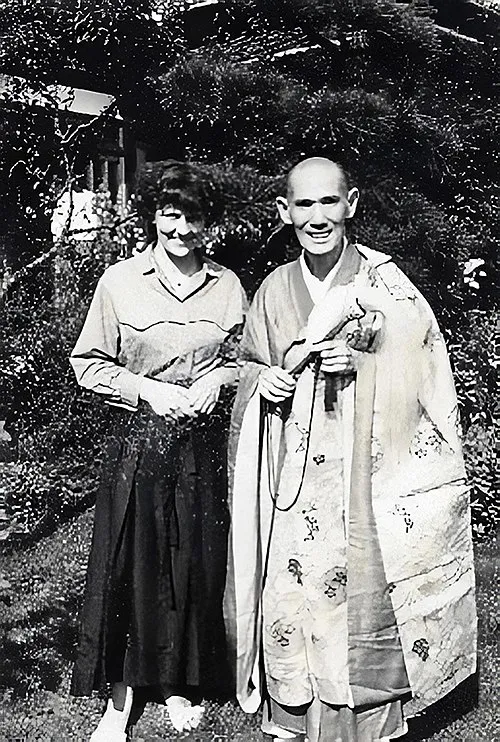
Sanbo-Zen (三宝禅, formerly Sanbo Kyodan, 'Three Treasures Association') is a modern Zen school founded by Yasutani Hakuun (1885–1973) that integrates Soto Zen's emphasis on shikantaza with the Rinzai tradition's systematic koan curriculum[1]. Yasutani's teacher, Harada Daiun Sogaku, had pioneered this synthesis by combining his Soto training with extensive Rinzai koan study under several masters[2]. The Sanbo-Zen approach offers practitioners both objectless sitting and a structured koan path, beginning with the Mu koan and progressing through the traditional Rinzai curriculum[1]. Under the leadership of Yamada Koun (1907–1989), the school became one of the most important vehicles for transmitting Zen to the West[3]. Yamada's radical openness—he trained Catholic priests and nuns, Protestant ministers, and practitioners of other faiths alongside traditional Buddhist students—transformed Zen from a Japanese cultural phenomenon into a genuinely international contemplative practice[3]. Robert Aitken (Diamond Sangha, Hawaii)[4] and Ruben Habito (Maria Kannon Zen Center, Dallas) are among the school's notable Western-based teachers. The school is headquartered in Kamakura, Japan.
Meditation practice
Sanbo-Zen uniquely synthesizes Soto shikantaza with the Rinzai koan curriculum, as developed by Harada Daiun Sogaku and refined by Yasutani Hakuun[1][2]. Training typically alternates between periods of objectless sitting and intensive koan investigation, with practitioners often beginning with Mu and then progressing through a streamlined Rinzai-style sequence in dokusan. The school is notable for treating kensho as a concrete experiential aim while still insisting that insight be stabilized through continued sitting, ethical life, and teacher verification. Under Yamada Koun, these methods were adapted for lay people and for practitioners from other religions, making Sanbo-Zen one of the most portable modern formats of formal Zen training[3].
Prominent masters
Key texts
- The Three Pillars of Zen
The first English-language book to present Yasutani Hakuun's Sanbō-Zen pedagogy in full — Yasutani's introductory lectures, verbatim dokusan transcripts, and contemporary enlightenment accounts. The book that introduced serious Zen training to a generation of Western practitioners.
- Flowers Fall: A Commentary on Dōgen's Genjōkōan
The second Sanbō-Zen patriarch's teishō on Dōgen's foundational fascicle — a model of how the school reads Sōtō texts through a koan lens without losing their shikantaza weight.
- Approach to Zen
Yasutani's own short introduction to Sanbō practice — the Five Varieties of Zen, the aim of kenshō, and the integration of zazen with koan work. The clearest statement of the school's founding vision.
Key concepts
- Five Varieties of Zen
Yasutani's typology (drawn from Guifeng Zongmi): bompu (ordinary), gedō (outside-way), shōjō (small-vehicle), daijō (great-vehicle), and saijōjō (supreme-vehicle) Zen. Used to locate what Sanbō-Zen is actually teaching.
- Miki koan curriculum
The streamlined koan sequence used in Sanbō-Zen, derived from Hakuin's Rinzai curriculum but reorganized by Harada Daiun and refined by Yasutani. Begins with Mu and moves through around 500 cases for full training.
In the words of the masters
- The Fact of Experience
Zen is not a philosophy. It is not a religion in the usual sense. Zen is the practice of coming to the fact of experience, before thought divides it.
- Mu Is Everything
When you become Mu, you swallow the whole universe. The whole universe becomes you.
- No Shortcuts
There are no shortcuts in Zen. If you want to walk, you must take every step yourself. No one can walk for you.
- Throw Yourself Into It
You must throw yourself into practice with your whole body and mind. Half-hearted practice produces half-hearted results.
- Drop Everything
Drop everything—your body, your mind, your opinions, your understanding. When there is nothing left to drop, that is it.
Masters in this branch
Sanbo-Zen practice centres
United States
Canada
Germany
Philippines
Poland
Sources in use
- Mountain Moon Sanbo-Zen Lineage Chart
- Zen Editorial Overlay - Originals Curation