Bankei Yotaku
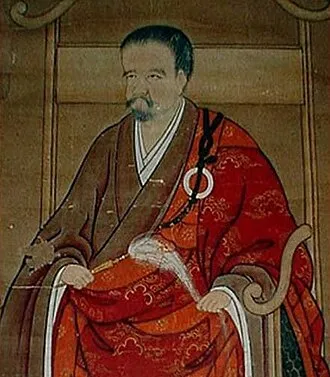
Bankei Yotaku
1622 – 1693
Bankei Yōtaku (盤珪永琢, 1622–1693) was one of the most distinctive Rinzai masters of the early Edo period and the foremost preacher of the doctrine of the *fushō* — the "Unborn" Buddha-mind[1]. He was born in Hamada in Harima Province, and as a boy his preoccupation with the meaning of the Confucian phrase *meitoku* ("bright virtue") drove him through years of extreme ascetic practice under Umpō Zenjō at Zuiō-ji until, weakened to the point of coughing blood, his decisive opening came in a moment of physical collapse[2].
His mature teaching — preached almost entirely in plain spoken Japanese rather than in literary kanbun, an unusual choice for a Rinzai master of his rank — held that the Buddha-mind is intrinsically *fushō* (不生), "unborn and marvellously illuminating," and that confusion arises only when one swaps this Unborn mind for habitual thought. He rejected formal koan curricula and pre-set practice routines, telling laypeople and monks alike that recognising the Unborn requires no special technique[3]. His public Dharma talks at Ryōmon-ji and Kōrin-ji are reported to have drawn audiences of several thousand — the largest Zen gatherings on record in pre-modern Japan[4].
Bankei received Dharma transmission from Umpō Zenjō on his teacher's deathbed and was eventually invited to oversee the newly built Ryōmon-ji at Aboshi and the major restoration of Myōshin-ji[1]. He refused to authorise written records of his teaching, but his students preserved his sermons in the *Butchi Kōsai Zenji Hōgo*; the modern edition and translation by Norman Waddell makes Bankei one of the few major Edo-period Zen masters whose preaching survives in something close to its spoken form[4].
Names
Teachers and lineage of Bankei Yotaku
Teacher / root master:
Teachings
- proverbDon't Side with Yourself
Don't side with yourself.
- sermonThe Unborn Buddha Mind
Everything is perfectly managed with the Unborn. When you abide in the Unborn, you abide at the source of all Buddhas. The Unborn is the origin of all and the beginning of all. There is no source apart from the Unborn and no beginning that is before the Unborn. When you abide in the Unborn, you are abiding in the Buddha-mind. The Buddha-mind is not something you need to seek outside yourself. Your parents did not give it to you; it was not given by your teacher. It is not something you have attained through practice. Since you have had it from the very beginning, there is no need to attain it now. Just do not exchange it for something else.
When thoughts arise, if you let them come and let them go without clinging to them or rejecting them, then there is no delusion. But the moment you attach to a thought, you trade the Buddha-mind for that thought. You swap what is unborn and imperishable for something that comes and goes. You become angry and turn the Buddha-mind into a fighting demon. You become greedy and turn it into a hungry ghost. All illusion arises from this one mistake: trading the Unborn for your thoughts.
- proverbThe Unborn Buddha-Mind
Your mind, as you were born with it, is the Unborn buddha-mind — marvelously illuminating, unmistaken. Simply not making anything of it, you abide where everything is complete.
- proverbDo Not Fight the Anger
Do not fight the anger that arises. Do not water it; do not feed it; do not push it away. The Unborn buddha-mind does the rest while you sit still.
- proverbNo Special Rules
I make no special rules for my students. Live as you live; only do not separate yourself from the Unborn. When the bell rings, come; when it is time to leave, go.
I speak the dharma in plain Japanese, not borrowed Chinese. The dharma is not a foreign letter you must memorize; it is your own grandmother's tongue, used carefully.
- proverbQuarrelsome Monk
A monk came to me complaining that he could not stop quarreling. I said: bring me your quarrel-mind, and I will sit on it. He could not find it. I told him: when next it arises, neither push nor cling — and you will find it has no resting place to be.
- proverbDo Not Borrow Anguish
If anguish does not arise from this moment, do not borrow it from the past. Memory is a useful servant; do not let it become the master of the meditation hall.
- proverbSnoring Monks
Some teachers strike snoring monks with the kyosaku. I let them snore — the body needs sleep, and the Unborn does not mind a snore. The next morning, the monk who slept practices freshly.
- proverbOld Woman in the Audience
An old woman heard one of my talks and went home and began to practice in her kitchen. Years later her son told me she had become a Buddha there. I never knew her name; the dharma did.
Other masters in Rinzai
Master Record Sources
- datesZen Editorial Overlay - Originals Curation
1622-1693
- nameZen Editorial Overlay - Originals Curation
Bankei Yotaku
- schoolZen Editorial Overlay - Originals Curation
Rinzai
- teachersZen Editorial Overlay - Originals Curation
Umpo Zenjo