Guifeng Zongmi
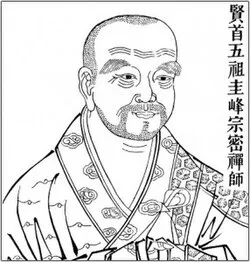
Guifeng Zongmi
Dates uncertain
Guifeng Zongmi is recorded in the historiography of the late-Tang / Song-period Chan transmission network as a transmission figure in its lineage. The surviving record preserves his place in the line; little distinctive doctrinal material from his teaching is preserved in modern scholarship[1].
Names
Teachers and lineage of Guifeng Zongmi
Teacher / root master:
Teachings
The various Chan schools may be classified according to their depth of understanding. The lowest teaches that all dharmas are illusory and that one should cut off all entanglements—but this falls into nihilism. The next teaches that all dharmas are like dreams, neither real nor unreal—but this can lead to indifference. The next teaches that the mind-ground is originally pure and that defilements have never truly existed—but this can lead to quietism. The highest teaches that the true mind is the source of both delusion and enlightenment, that it is not empty and not existent, that it neither arises nor ceases. This is the teaching that directly reveals the nature of mind, and it encompasses all the others.
Other masters in Early Chan
Master Record Sources
Guifeng Zongmi
Other
- teachersChart of the Chan Ancestors
Suizhou Daoyuan (Q11)
- identityWikipedia - Zen Lineage Charts
Guīfēng Zōngmì (780–841) was a Tang dynasty Chan master and Huayan patriarch, famous for his comprehensive survey of Buddhist and Chan teachings in works such as the Chan Prolegomenon (Chanyuan zhuquanji duxu).
Zōngmì (780–841): Tang-dynasty monk who studied under Chengguan and Suizhou Daoyuan; his encyclopedic Chan Prolegomenon synthesised the major Chan lineages and is the primary source for understanding ninth-century Chan sectarian identity.