Early Chan
Chan
Early Chan
Branch of Chan
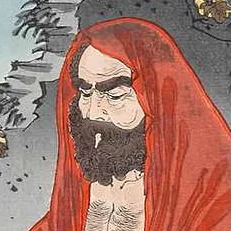
Early Chan encompasses the formative period from Bodhidharma's arrival in China (traditionally c. 520 CE) through the Sixth Patriarch Huineng and his immediate successors, before the tradition divided into distinct house lineages[1]. This era includes the six patriarchs—Bodhidharma, Huike, Sengcan, Daoxin, Hongren, and Huineng—as well as precursor figures like Mahasattva Fu and independent lineages such as the Oxhead (Niutou) school and the Jingzhong school of Sichuan[1]. The period's defining crisis was the Northern-Southern School controversy: Shenxiu's gradualist approach versus Huineng's sudden awakening, with Heze Shenhui's polemical advocacy eventually establishing the Southern School as orthodox[2]. Huineng's Platform Sutra became the foundational text[3], and his two principal students—Qingyuan Xingsi and Nanyue Huairang—gave rise to the two great branches from which all subsequent Chan schools descend[1].
Meditation practice
Early Chan practice centered on Bodhidharma’s method of ‘wall-gazing’ (biguan)—sustained seated meditation aimed at directly perceiving the mind’s nature[4]. Daoxin and Hongren’s East Mountain teaching systematized this into communal monastic sitting, emphasizing the ‘samadhi of one practice’ (yixing sanmei) and Hongren’s ‘guarding the one’ (shouyi, 守一)[5]. The Northern School under Shenxiu taught a graduated purification of mental defilements through the contemplative method outlined in the Guanxin Lun (attributed to his school), while the Southern School championed by Huineng and Shenhui insisted on sudden recognition that mind is originally pure[2]. The Oxhead (Niutou) school offered a third approach, emphasizing the emptiness of mind itself and the non-arising of thoughts, influenced by Madhyamaka philosophy[6].
Prominent masters
Key texts
- Two Entrances and Four Practices
The earliest text of the Chan tradition, framing practice as two entrances — the entrance by principle (liru) and the entrance by practice (xingru) — and describing four attitudes to daily life: accepting karma, adapting to conditions, seeking nothing, and according with the Dharma.
- Inscription on Faith in Mind
'Xinxin Ming' — a 146-line poem on the non-dual mind, traditionally credited to the Third Patriarch. Its opening ('The great way is not difficult for those who have no preferences') is among the most quoted lines in all Zen literature.
- Platform Sutra of the Sixth Patriarch
The defining document of the Southern School. Huineng's autobiography, the verse contest with Shenxiu, and the sudden-awakening teaching that settled the Northern/Southern controversy and became the charter of mature Chan.
- Song of Enlightenment
'Zhengdao Ge' — a lyrical summary of Southern-School awakening in 267 lines, written by Huineng's short-lived but brilliant dharma heir. Memorized in Korean and Japanese monasteries as a concise statement of Chan understanding.
Key concepts
- Biguan
'Wall-gazing' — the meditative posture attributed to Bodhidharma during his nine-year sit at Shaolin. Paradigmatic of the unmoving, non-seeking quality of Chan zazen.
- Dunwu
'Sudden awakening.' Huineng's and Shenhui's core claim against the Northern School: awakening is not a gradual accumulation but the recognition that mind is originally pure.
- Yixing sanmei
'Samādhi of one practice' — the meditative absorption taught by Daoxin and Hongren at East Mountain: unbroken recollection of a single contemplative object until it becomes the whole field of awareness.
- Shouyi
'Guarding the one' — Hongren's distilled instruction: keep awareness gathered on the mind itself, without dispersal, without grasping, until its original nature is recognized.
In the words of the masters
- No Preferences
The Great Way is not difficult for those who have no preferences.
- Your Original Face
What was your original face before your parents were born?
- It Is Your Mind That Moves
It is not the wind that moves. It is not the flag that moves. It is your mind that moves.
- In Walking, Just Walk
In walking, just walk. In sitting, just sit. Above all, don't wobble.
- Empty-Handed, I Hold the Hoe
Empty-handed, I hold the hoe. Walking, I ride the water buffalo. Crossing the bridge— the bridge flows, the water stands still.
- No Merit
Emperor Wu asked: how much merit have I gained from building temples? I said: no merit. Real virtue does not count itself; the moment you keep score, you have walked out of it.