Trúc Lâm
Thiền
Trúc Lâm
Trúc Lâm · 竹林
Branch of Thiền
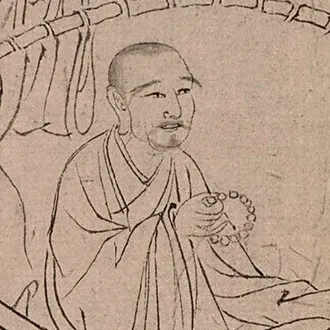
The Trúc Lâm (竹林, Bamboo Forest) school is the only indigenous Vietnamese Zen tradition, founded in 1299 by Trần Nhân Tông (1258–1308), the third emperor of the Trần dynasty who abdicated the throne to become a monk[1]. After personally leading Vietnam to victory in the second and third Mongol invasions (1285 and 1288), Trần Nhân Tông retired to Yên Tử Mountain and unified the three existing Vietnamese Thiền schools—the Vinitaruci, Vô Ngôn Thông, and Thảo Đường lineages—into a single school[1][2]. The Trúc Lâm tradition was continued by two more patriarchs, Pháp Loa (1284–1330) and Huyền Quang (1254–1334), before gradually declining as a distinct school[2]. It was revived in the twentieth century by Thích Thanh Từ as a modern Vietnamese contemplative movement with monasteries across the country[3].
Meditation practice
The Trúc Lâm school, as revived by Thích Thanh Từ, emphasizes meditation-centered training rooted in Trần Nhân Tông’s synthesis of the older Vietnamese Thiền streams[3]. Practitioners are directed toward ‘knowing the mind and seeing the nature’ (tri tâm kiến tánh), often through seated meditation and direct questioning practices such as ‘Who is dragging this corpse around?’ In its modern form, Trúc Lâm intentionally re-centers contemplative discipline within a Buddhist landscape often dominated by ritual and devotional forms, while still remaining fully Mahayana in ethical and monastic orientation. Its ideal is a distinctly Vietnamese Zen life in which clarity of mind, simplicity, and disciplined sitting are the foundation.
Prominent masters
Key texts
- Cư Trần Lạc Đạo Phú
'Living in the World, Joyful in the Way' — the founder's rhyme-prose in the Vietnamese Nôm script. A vernacular manifesto for lay practice: awakening happens here, in ordinary life, not only in the mountains.
- Đắc Thú Lâm Tuyền Thành Đạo Ca
'Song of Attaining the Delight of Forests and Streams and Realizing the Way' — Trần Nhân Tông's meditation poem composed at Yên Tử. A lyrical map of the practitioner's progress from retreat to realization.
- Thánh Đăng Ngữ Lục
'Record of the Sacred Lamp' — the sayings and deeds of the three Trúc Lâm patriarchs (Trần Nhân Tông, Pháp Loa, Huyền Quang). The canonical internal history of the school.
Key concepts
- Tri tâm kiến tánh
'Know the mind, see the nature' — the core Trúc Lâm instruction as re-articulated by Thích Thanh Từ. Zazen is not for producing states but for letting the mind's own clear nature be recognized.
- Yên Tử mountain practice
The retreat ideal embodied by Trần Nhân Tông on Mount Yên Tử after his abdication — disciplined sitting, forest simplicity, and the refusal of royal luxury. The school's paradigmatic setting.
- Unification of three lineages
Trúc Lâm's founding act: Trần Nhân Tông absorbed the Vinītaruci, Vô Ngôn Thông, and Thảo Đường schools into a single Vietnamese Thiền. The only indigenous Zen tradition in East Asia.
In the words of the masters
- Knowing the Mind, Seeing the Nature
Buddha is not somewhere else. Go back into your own mind and see clearly — there the Buddha has been waiting all along. Search outside, and you will run to exhaustion and not arrive.
- Living Carefree According to Conditions
When hungry, eat. When tired, rest. When things come, respond. When they go, let them pass. The Way is not rare — only the willingness to meet it plainly.
- Three Mountains, One House
On Yên Tử there are three peaks. The Trúc Lâm school stands on all three at once. A teaching that fits only one peak is not yet a teaching.
- King Today, Monk Tomorrow
I sat on the throne for many years. The day I left it was no different from any other day — the morning bell rang, the rice cooked, the body bowed. Only the crown stopped being mistaken for the head.
- Buddha in the House
There is a Buddha in your house — kindly do not invite a stranger. Sit at your own hearth, light your own lamp; the Buddha will recognize his own light burning.
- Fields and Altars
When the rice fields are well kept, the altars take care of themselves. When the altars are well kept, the rice fields take care of themselves. The Way is the same farmer in different clothes.
Masters in this branch
Trúc Lâm practice centres
Vietnam
Sources in use
- Lê Mạnh Thát — Vietnamese Buddhist history publications
- Cuong Tu Nguyen — medieval Vietnamese Buddhism scholarship