Keizan Jōkin
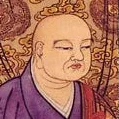
Keizan Jōkin
1264 – 1325
Keizan Jōkin (1264–1325) is conventionally treated in modern Sōtō Zen as the school's "second founder" (*taiso*), complementing Dōgen's role as philosophical founder, and is sometimes called "the Great Popularizer" for his role in extending Sōtō practice beyond the small monastic milieu of Eihei-ji[1]. This two-founder designation, however, dates only from the late nineteenth century — it is a Meiji-era Sōtōshū institutional codification that consolidated the Sōtō school's modern self-image around the parity of Eihei-ji and Sōji-ji[2]. The earlier birth-year of 1268 still appears in some institutional sources, but Bodiford's Encyclopedia of Religion entry corrects this: "Born in 1264 (not 1268 as previously assumed)"[2].
Within his own institutional career Keizan presided over the absorption of two prior Shingon temples into the emergent Sōtō network — Yōhō-ji in 1312 and Shogaku-ji (renamed Sōji-ji) in 1322 — bringing with them the *mikkyō* ritual repertoire (state-protection prayers, memorial ceremonies for ancestors) that became distinctively woven into provincial Sōtō practice and made the school socially compatible with the religious life of late-Kamakura Japan[1]. Bernard Faure's monograph *Visions of Power* (1996) characterises him "less as an original thinker than as a representative of his culture and an example of the paradoxes of the Sōtō school," drawing institutional authority from dreams, relics, and visions rather than the strictly textual sources Dōgen had favoured[2].
Keizan's *Denkōroku* (*Transmission of the Lamp*) records the awakening stories of the Indian and Chinese patriarchs and makes the lineage narratively vivid for Japanese practitioners; modern attribution of authorship to Keizan was stabilised only after a 1959 manuscript discovery, and earlier scholars (Ōkubo, Cook) raised authorship doubts on textual grounds[3]. The institutional dominance of Sōji-ji over Eihei-ji in modern Japan was largely the achievement of his Dharma heir Gasan Jōseki and the late-14th to Edo-period institutional consolidation that followed, rather than of Keizan's own lifetime; Yōkō-ji, not Sōji-ji, was the monastery Keizan himself envisioned as the future Sōtō headquarters[2].
Names
Disciples of Keizan Jōkin
Teachers and lineage of Keizan Jōkin
Teacher / root master:
Works
Keizan's record of the lineage from Śākyamuni through fifty-two generations of Indian, Chinese, and Japanese ancestors down to Ejō, his teacher. Each chapter pairs an awakening dialogue with Keizan's commentary and verse. Together with the Shōbōgenzō it forms one of the two foundational texts of Sōtō Zen.
Keizan's practical complement to Dōgen's Fukanzazengi: a detailed handbook on posture, attention, the management of drowsiness and distraction, and the integration of zazen into daily life. Often the second text a Sōtō student is given after the Fukanzazengi.
Teachings
- practice-instructionPoints to Watch in Zazen
Keizan's Zazen Yōjinki ('Points to Watch in Zazen') gives the Sōtō practitioner a manual for the body of practice, where Dōgen's Fukanzazengi gives the spirit. Choose a clean, quiet place. Sit on a thick cushion, legs in lotus or half-lotus, spine erect, ears aligned with shoulders, nose with navel. The tongue rests against the upper palate; the eyes are open but soft, gaze cast slightly downward. Breathe through the nose, neither holding nor pushing. 'Do not think of the koans. Do not turn the mind toward enlightenment. Do not turn it away. Sit upright in the midst of all conditions, neither extinguishing thoughts nor following them. This is the zazen of the buddhas and ancestors.' From this single instruction the daily life of the Sōtō monastery is built.
- dialogueThe Transmission to Mahakashyapa
Once on Vulture Peak, the World-Honored One held up a flower before the assembly. All were silent. Only Mahakashyapa broke into a broad smile. The World-Honored One said, 'I possess the treasury of the true Dharma eye, the marvelous mind of nirvana, the true form of the formless, the subtle Dharma gate. It does not rest on words or letters but is a special transmission outside the scriptures. I entrust it to Mahakashyapa.' Thus the lamp of the Dharma was transmitted for the first time. You must understand: what was transmitted was not something that can be put into words, nor is it something separate from words. Mahakashyapa's smile was not a sign of understanding—it was the thing itself.
Zazen is not something you learn to do. It is simply sitting in the awareness that is already here. Do not try to become a buddha—you already are one. Do not try to get rid of delusions—they are already empty. When sitting, let body and mind fall away naturally. Do not follow thoughts, and do not push them away. Just sit, upright and alert, like a great mountain that cannot be moved. Breathe naturally. Whether thoughts come or go, whether the mind is clear or cloudy, just continue sitting. This sitting itself is the gateless gate of liberation.
This Way is not the possession of the learned or the gifted. It does not belong to monks alone, nor to those of high birth. Any person, whether man or woman, whether wise or simple, can realize this great matter. The Buddha-nature makes no distinctions. A farmer in the field, a woman drawing water—each one possesses the same luminous nature as the Buddha himself. This is why we must open the gate of practice wide, so that all beings may enter.
- proverbBroad Seat
Spread the seat of the practice broadly. Do not gather the dharma into a narrow line of monks; let nuns sit, let the children sit, let the donor sit beside the abbot. The seat that excludes is too small for the buddhas.
I write this Record because the lamp must not be left in only one hand. Each face in the lineage held the lamp differently; only by writing them down do we see the family resemblance.
- proverbWomen Too
If the dharma stops at the gate of the nuns' hall, it is no longer the dharma. I built temples open to women practitioners. Some called me lax. The dharma called me back to my work.
- proverbThree Poisons in One Cup
Greed, anger, ignorance — three poisons in one cup. To drink them is hell; to refuse them is hell; to look at the cup until the cup itself becomes empty is the practice.
- proverbGround of Being
The ground of being is not below your feet; it is what your feet are pressed into and out of, breath by breath. To practice is to learn how to step on it without forgetting.
- proverbWomen and Children Sit Too
Whenever I built a hall, I made sure the women and children could sit there. The dharma had no robe of its own; it accepted any size.
Other masters in Sōtō
Master Record Sources
1264-1325
Keizan Jokin
Soto
Tettsu Gikai (Shakyamuni Buddha and the Two Founders)