Tettsū Gikai
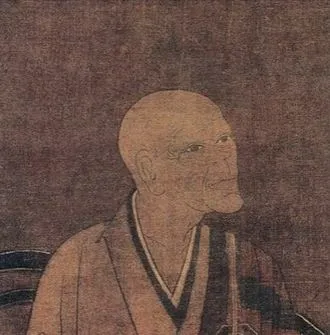
Tettsū Gikai
1219 – 1309
Tettsū Gikai (徹通義介, 1219–1309) entered the early Dōgen community in 1241 with the survivors of the suppressed Daruma-shū around Kakuzen Ekan, received Dōgen's bodhisattva precepts in 1242, and remained at Eihei-ji as a senior monk under Koun Ejō until being installed as third abbot in 1267[1]. His tenure became the immediate trigger for the *Sandai sōron* (三代相論, "third-generation dispute"), the early Sōtō controversy over whether his selective integration of esoteric ritual and lay-funeral observance into Eihei-ji practice constituted a betrayal of Dōgen's austere standard. Around 1272 he stepped aside and Ejō resumed the abbacy; Gikai eventually left Eihei-ji and re-settled at Daijō-ji in Kaga[2].
Although the *Sandai sōron* split the original Eihei-ji line, Gikai's branch — through his Dharma heir Keizan Jōkin and Keizan's heirs Meihō Sotetsu and Gasan Jōseki — produced the network of provincial Sōtō temples (Sōji-ji, Yōkō-ji, and the Gasan-ha + Meihō-ha lines) that became the numerically dominant form of medieval and modern Japanese Sōtō Zen[3]. The narrative of the dispute itself is, however, late-attested: it appears in the historical record only about 150 years after the events it claims to describe, and contemporary scholarship reads it less as a contemporaneous theological rupture than as a 15th-century partisan reconstruction by the Jakuen-line monk Kenkō and his disciple Kenzei, written into Sōtō history to support specific institutional claims about the Eihei-ji abbacy[3]. Gikai had two Eihei-ji tenures (1267–72 and 1280–87) rather than a single deposition; the specifically *mikkyō* / Shingon character of the integrations he brought to Eihei-ji (prayers, incantations, Mahāvairocana ritual material from Daijō-ji's earlier identity as a Shingon site) was the substantive issue rather than generic "reformism".
Names
Disciples of Tettsū Gikai
Teachers and lineage of Tettsū Gikai
Teacher / root master:
Teachings
Some say that the original face has no form and therefore needs no ritual to express it. But what is this 'no form'? Is it a vacant field? Is it a white wall? The sky does not refuse to bear clouds because it is empty. The bell does not refuse to ring because metal has no inherent sound. Dōgen himself said: 'The way of the Buddha is to know the self.' To know the self is not to strip away all expression. It is to let each act be an act of the dharma-body itself. When we chant, the dharma-body chants. When we offer incense, the dharma-body makes offering. To call this contamination is to think that mud makes the lotus root dirty.
A student challenged Gikai: 'Those who oppose you say you have departed from Dōgen's teaching. What do you say?' Gikai replied: 'Dōgen's teaching is zazen. Have I stopped sitting? Have I told you to stop? Whatever else I have done, I have not removed a single cushion from this hall. Go sit. The dispute will settle itself.' Later he added: 'Practice that cannot hold the complexity of a living community is not yet fully matured. A hermit's purity is pure, but it does not plant the rice that feeds the province.'
Other masters in Sōtō
Master Record Sources
1219-1309
Tettsu Gikai
Soto
Koun Ejo (Shakyamuni Buddha and the Two Founders)