Ashvaghosha
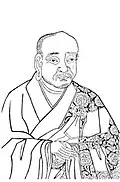
Ashvaghosha
c. 80 – c. 150
Aśvaghoṣa (c. 80–150 CE), counted as the twelfth Chan patriarch, is among the most important and historically attested figures of early Indian Mahāyāna Buddhism[1]. A poet, dramatist, and philosopher active during the reign of the Kuṣāṇa emperor Kaniṣka, he is the author of two surviving Sanskrit *kāvya* (court-poetry) works—the *Buddhacarita* (Acts of the Buddha) and the *Saundarananda*—that constitute the earliest classical Sanskrit *kāvya* poetry to come down to us. The *Buddhacarita* in particular survives in fragmentary Sanskrit and complete Tibetan and Chinese translations and is one of the principal early biographies of the Buddha[2].
Aśvaghoṣa is also traditionally credited with the *Mahāyāna-śraddhotpāda-śāstra* (*Treatise on the Awakening of Mahāyāna Faith*), one of the foundational texts of East Asian Mahāyāna. The *Awakening of Faith* lays out the doctrine of the One Mind possessing two aspects—the absolute (*tathatā*) and the conditioned (*saṃsāra*)—and develops the *tathāgatagarbha* (Buddha-nature) tradition that became central to Hua-yen, Tiantai, and Chan thought[3]. Modern scholarship is sceptical, however, that the historical Aśvaghoṣa was the actual author. Yoshito Hakeda summarizes the consensus view that the text was composed in fifth- or sixth-century China, possibly originally in Chinese rather than Sanskrit, and back-attributed to Aśvaghoṣa to lend Mahāyāna authority[4]. The treatise is nevertheless central enough to East Asian Buddhism that the attribution made him one of the most cited authors in the Chinese Buddhist canon.
In the traditional Chan biography preserved in the *Jǐngdé Chuándēng Lù*, Aśvaghoṣa was a brahmin disputant of Buddhism in Pāṭaliputra (modern Patna) before his conversion by Pārśva (or, in some recensions, by Pārśva's disciple Puṇyayaśas)[5]. After receiving transmission, he is said to have served as imperial preceptor at Kaniṣka's court, where he composed his epics and instructed the emperor in the Dharma[6]. His name—"Horse-Cry"—is explained in legend by the report that he could make horses weep when he expounded the truth.
Names
Disciples of Ashvaghosha
Teachers and lineage of Ashvaghosha
Teacher / root master:
Teachings
The Mind in terms of the Absolute is the one World of Reality and the essence of all phases of existence in their totality. That which is called the essential nature of the Mind is unborn and imperishable. All things are only different aspects of this one Mind. The mind from the beginning is of a pure nature, but since there is the finite aspect of it which is sullied by finite views, there is the sullied aspect of it. Yet the original pure nature of the mind is eternally unchanged. This is the meaning of tathagatagarbha—the womb of the Thus-Come-One, the original enlightenment present in all beings.
- proverbLife of the Buddha
I wrote the life of the Buddha as a poet. Whoever reads only the doctrine misses the body of the man who carried it; whoever reads only the man misses the doctrine he carried.
- proverbAwakening of Faith
Faith is not belief in a thing; faith is the willingness to keep sitting when the belief in sitting has gone. The dharma waits for the second kind.
- proverbPoet and Monk
The poet hopes for a perfect verse and grieves the imperfect one. The monk practices the imperfect verse and lets the perfect one go.
Other masters in Indian Patriarchs
Master Record Sources
- datesZen Editorial Overlay - Originals Curation
c. 80-150 CE
- nameZen Editorial Overlay - Originals Curation
Ashvaghosha
- schoolZen Editorial Overlay - Originals Curation
Indian Patriarchs
- teachersZen Editorial Overlay - Originals Curation
Punyayashas
- identityWikipedia - Zen Lineage Charts
Aśvaghoṣa (c. 1st–2nd century CE) was a philosopher-poet who authored the Buddhacarita (life of the Buddha) and the Awakening of Faith; he is counted the twelfth Indian patriarch in Chan transmission lists.