Shakyamuni Buddha
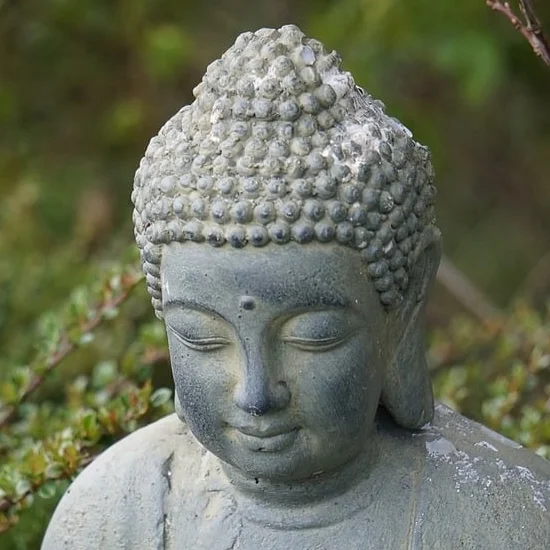
Shakyamuni Buddha
c. 563 BCE – c. 483 BCE
Shakyamuni Buddha — the Awakened One of the Śākya clan — was born Siddhārtha Gautama in Lumbinī, in the foothills of what is now southern Nepal, sometime in the fifth or sixth century BCE; modern scholarship has progressively shortened the date range, with most current reconstructions placing his death between roughly 410 and 370 BCE[1]. His father Śuddhodana led the Śākya republic from its capital at Kapilavastu; his mother Māyādevī died seven days after his birth and was succeeded by her sister Mahāprajāpatī Gautamī, who raised him alongside his half-brother Nanda[2]. Traditional biographies describe a sheltered princely upbringing within the palace walls, marriage to Yaśodharā, and the birth of a son, Rāhula. The early canonical *Ariyapariyesana Sutta* and the later *Buddhacarita* of Aśvaghoṣa preserve the narrative of the "four sights" — an old man, a sick man, a corpse, and a wandering ascetic — that prompted his renunciation at twenty-nine[3].
Leaving home as a *śramaṇa*, Siddhārtha studied under the meditation masters Āḷāra Kālāma and Uddaka Rāmaputta, attaining the highest formless absorptions but finding them insufficient for the liberation he sought[4]. He then practiced extreme asceticism for six years in the forests of Uruvelā with five companions before concluding that mortification of the body was no closer to awakening than indulgence had been; this realization gave rise to the doctrine of the Middle Way[5]. Sitting beneath a *pīpal* tree at what would become Bodh Gayā, after a night of progressive meditative absorption, he attained complete and unsurpassed awakening (*anuttarā samyaksaṃbodhi*) and was henceforth called the Buddha — "one who has awakened."
Some weeks later, in the Deer Park at Sarnath, the Buddha gave his first discourse, the *Dhammacakkappavattana Sutta* ("Setting in Motion the Wheel of Dharma"), to the five companions of his earlier ascetic life[6]. The discourse outlines the Four Noble Truths — the truths of suffering, of its origin in craving, of its cessation, and of the Noble Eightfold Path that leads to cessation — and remains the most concise formulation of the Buddha's diagnostic and therapeutic vision. Kauṇḍinya and the four others became the first members of the Buddhist Sangha, which together with the Buddha and his Dharma constitute the Three Jewels in which all later Buddhists take refuge.
For forty-five years the Buddha walked the Gangetic plain, residing each rains-retreat in one of the early monastic *vihāras* donated by lay followers — Anāthapiṇḍika's Jetavana grove at Sāvatthī, the Bamboo Grove (Veḷuvana) at Rājagṛha given by King Bimbisāra, and others[7]. He taught monarchs (Bimbisāra of Magadha, Pasenadi of Kosala), brahmins, householders, and outcastes, and is described in the discourses as adjusting his teaching to the capacity of each listener (*upāya*). Among his foremost disciples were Śāriputra, foremost in wisdom; Mahāmaudgalyāyana, foremost in psychic abilities; Ānanda, his cousin and personal attendant who memorized the discourses; and Mahākāśyapa, foremost in austere discipline. After repeated entreaty by Mahāprajāpatī and Ānanda's intervention, the Buddha admitted women to the monastic order, founding the *bhikkhunī* sangha — the earliest formally organized community of women renunciants in any world religion[8].
The corpus of teachings preserved in the early sutta collections of the Pāli Canon (the *Sutta Piṭaka*) and the parallel *Āgamas* in Chinese is doctrinally compact but vast in scope. Central is the analysis of conditioned existence through *paṭicca-samuppāda* (dependent origination) — the formula that whatever arises does so in dependence on causes and conditions — and the three marks of existence: impermanence (*anicca*), unsatisfactoriness (*dukkha*), and non-self (*anattā*)[9]. These analyses dissolve the apparently solid self into a stream of conditioned processes and underwrite the soteriological claim that liberation (*nirvāṇa*) is the ending of clinging rather than the attainment of any new state. The Buddha rejected both eternalist views of an unchanging soul and annihilationist views of a self that simply ends at death, holding that liberation is realized through direct insight in the present. The terse aphoristic discourses preserved in the *Dhammapada* — among the most widely translated of early Buddhist texts — give one of the canon's most concentrated expressions of this ethical and contemplative diagnosis[13].
At about age eighty, after a meal at the home of the smith Cunda, the Buddha entered final *parinirvāṇa* in a grove of *sāl* trees near Kuśinagara. The *Mahāparinibbāna Sutta* preserves what tradition holds to be his last words to the assembled disciples — *vayadhammā saṅkhārā, appamādena sampādetha*: "all conditioned things are subject to decay; strive on with diligence"[10]. His relics were divided among the major polities of the region and enshrined in *stūpas*, the architectural form that would carry his memory across Asia. Within a year of his death, five hundred elders convened the First Council at Rājagṛha, where Ānanda recited the discourses ("Thus have I heard…") and Upāli the monastic discipline, fixing the canonical recension that descended through oral transmission for several centuries before being committed to writing.
For the Chan, Sŏn, Thiền, and Zen traditions, Shakyamuni is venerated not only as the historical teacher but as the source of a distinct line of transmission "outside the scriptures." The *locus classicus* is the Flower Sermon, recorded in later Chinese sources — most prominently the *Wúménguān* (*Mumonkan*, Case 6): on Vulture Peak the Buddha held up a flower without speaking, and only Mahākāśyapa smiled in recognition; the Buddha replied, "I have the eye of the true Dharma, the marvelous mind of nirvāṇa, the true mark of formlessness, the subtle Dharma gate that does not rest on words and letters and is transmitted outside the scriptures — this I entrust to Mahākāśyapa"[11]. Modern scholarship traces the explicit textual record of this episode to the eleventh-century *Tiānshèng Guǎngdēng Lù* and to the *Wúménguān* of 1228, although the underlying claim of a wordless transmission is older[12]. In Chan iconography Shakyamuni stands at the head of a lineage chart of twenty-eight Indian patriarchs leading to Bodhidharma, who in turn brought the transmission to China.
Names
Disciples of Shakyamuni Buddha
Teachings
When Buddha was in Grdhrakuta mountain he turned a flower in his fingers and held it before his listeners. Every one was silent. Only Maha-Kashapa smiled at this revelation, although he tried to control the lines of his face. Buddha said: "I have the eye of the true teaching, the heart of Nirvana, the true aspect of non-form, and the ineffable stride of Dharma. It is not expressed by words, but especially transmitted beyond teaching. This teaching I have given to Maha-Kashapa." Mumon’s comment: Golden-faced Gautama thought he could cheat anyone. He made the good listeners as bad, and sold dog meat under the sign of mutton. And he himself thought it was wonderful. What if all the audience had laughed together? How could he have transmitted the teaching? And again, if Maha-Kashapa had not smiled, how could he have transmitted the teaching? If he says that realization can be transmitted, he is like the city slicker that cheats the country dub, and if he says it cannot be transmitted, why does he approve of Maha-Kashapa? At the turning of a flower His disguise was exposed. No one in heaven or earth can surpass Maha-Kashapa's wrinkled face.
In the time of Buddha Shakyamuni, Manjusri went to the assemblage of the Buddhas. When he arrived there, the conference was over and each Buddha had returned to his own Buddha-land. Only one girl was yet unmoved in deep meditation. Manjusri asked Buddha Shakyamuni how it was possible for this girl to reach this state, one which even he could not attain. "Bring her out from Samadhi and ask her yourself," said the Buddha. Manjusri walked around the girl three times and snapped his fingers. She still remained in meditation. So by his miracle power he transported her to a high heaven and tried his best to call her, but in vain. Buddha Shakyamuni said: "Even a hundred thousand Manjusris could not disturb her, but below this place, past twelve hundred million countries, is a Bodhisattva, Mo-myo, seed of delusion. If he comes here, she will awaken." No sooner had the Buddha spoken than that Bodhisattva sprang up from the earth and bowed and paid homage to the Buddha. Buddha directed him to arouse the girl. The Bodhisattva went in front of the girl and snapped his fingers, and in that instant the girl came out from her deep meditation. Mumon’s comment: Old Shakyamuni set a very poor stage. I want to ask you monks: If Manjusri, who is supposed to have been the teacher of seven Buddhas, could not bring this girl out of meditation, how then could a Bodhisattva who was a mere beginner? If you understand this intimately, you yourself can enter the great meditation while you are living in the world of delusion. One could not awaken her, the other could. Neither are good actors. One wears the mask of god, one a devil's mask. Had both failed, the drama still would be a comedy.
The finger pointing at the moon is not the moon. All the words I speak to you are like a finger pointing at the moon. Do not mistake the finger for the moon.
Sitting quietly, doing nothing, spring comes, and the grass grows by itself.
- proverbWhen Hungry, Eat
When hungry, eat. When tired, sleep. Fools laugh at me. But the wise understand.
When you get to the top of the mountain, keep climbing.
- proverbEmpty-Handed, I Hold the Hoe
Empty-handed, I hold the hoe. Walking, I ride the water buffalo. Crossing the bridge— the bridge flows, the water stands still.
The ten thousand things return to the one. Where does the one return to?
- proverbThe Old Pond
The old pond— a frog jumps in, sound of water.
No snowflake ever falls in the wrong place.
- proverbBe a Lamp Unto Yourself
Be a lamp unto yourself. Work out your liberation with diligence.
- proverbThe Obstacle Is the Path
The obstacle is the path.
- proverbLet Go, or Be Dragged
Let go, or be dragged.
- proverbZen on the Mountaintops
The only Zen you find on the tops of mountains is the Zen you bring up there.
- proverbThings Are Just as They Are
If you understand, things are just as they are. If you do not understand, things are just as they are.
Not thinking about anything is Zen. Once you know this, walking, standing, sitting, or lying down, everything you do is Zen.
- proverbThe Place You Need to Be
Wherever you are, it is the place you need to be.
To follow the path, look to the master, follow the master, walk with the master, see through the master, become the master.
- proverbWhen Walking, Just Walk
When walking, just walk. When eating, just eat.
- proverbSeek What They Sought
Do not seek to follow in the footsteps of the wise; seek what they sought.
Other masters in Indian Patriarchs
Master Record Sources
- datesZen Editorial Overlay - Originals Curation
c. 563-483 BCE
- nameZen Editorial Overlay - Originals Curation
Shakyamuni Buddha
- schoolZen Editorial Overlay - Originals Curation
Indian Patriarchs
- identityWikipedia - Zen Lineage Charts
Gautama Buddha (c. 5th–4th century BCE), also known as Shakyamuni, was the historical founder of Buddhism whose awakening under the Bodhi tree initiated the tradition of dharma transmission.