Shanakavasa
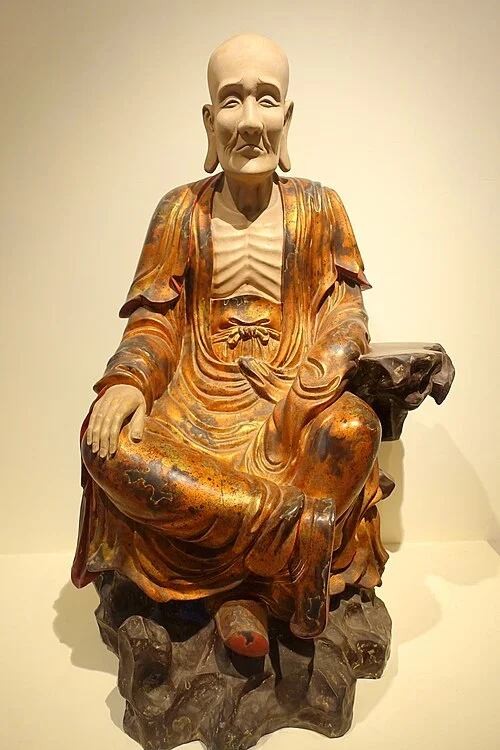
Shanakavasa
5th c. BCE – Unknown
Śāṇavāsa is named third in the standard Chan lineage of twenty-eight Indian patriarchs as codified in the *Jǐngdé Chuándēng Lù* (Jingde Record of the Transmission of the Lamp, 1004) and reproduced in the later *Wǔdēng Huìyuán* (1252)[1]. Within Chan he is the disciple of Ānanda and the teacher of Upagupta. The earliest narrative material attaching to him appears in the Sanskrit *Aśokāvadāna* and related *avadāna* literature, where he is associated with the Mathurā region, depicted as wearing a hempen robe (*śāṇa* = "hemp," the conventional etymology of the name), and credited with the conversion of large numbers of practitioners in northwestern India[2].
Modern scholarship treats the Chan list of patriarchs from Śāṇavāsa onward as a doctrinal genealogy rather than a historical reconstruction. Heinrich Dumoulin notes that the precise twenty-eight-name sequence is a Chan literary construction; few of the figures between Ānanda and Bodhidharma can be reliably correlated with the historical record[3]. What the tradition affirms through these names is the principle of *cittena cittasya saṃkrāntiḥ*—the transmission of mind by mind—rather than a documented chain of attested teachers and students.
Names
Disciples of Shanakavasa
Teachers and lineage of Shanakavasa
Teacher / root master:
Teachings
- dialogueThe Robe That Never Wears Out
When Ānanda was about to transmit the Dharma, Śāṇavāsa asked him: 'What did the World-Honored One transmit to Mahākāśyapa besides the robe and bowl?' Ānanda descended from his seat, stood upright, and folded his hands. Śāṇavāsa said: 'I understand.' Ānanda said: 'What have you understood?' Śāṇavāsa said: 'It is just this—nothing hidden, nothing added.' Keizan's verse: The hemp robe worn since birth / never tears and never frays. / What is this robe? / Search the ten directions—nothing lacks it.
- sayingBorn Already Robed
Śāṇavāsa is said to have been born wearing a hempen robe, the same robe he wore throughout his practice and in which he entered nirvāṇa. When asked about this wonder, he said: 'This robe is not mine alone. Every being is born already wearing it. The only question is whether you know you have it on.'
Other masters in Indian Patriarchs
Master Record Sources
- datesZen Editorial Overlay - Originals Curation
trad. 5th c. BCE
- nameZen Editorial Overlay - Originals Curation
Shanakavasa
- schoolZen Editorial Overlay - Originals Curation
Indian Patriarchs
- teachersZen Editorial Overlay - Originals Curation
Ananda
- identityWikipedia - Zen Lineage Charts
Śāṇakavāsa (also Śāṇavāsin) was a disciple of Ānanda and is counted the third Indian patriarch in Chan/Zen transmission lineages; his name refers to the hemp garment he reportedly wore from birth.