Parshva
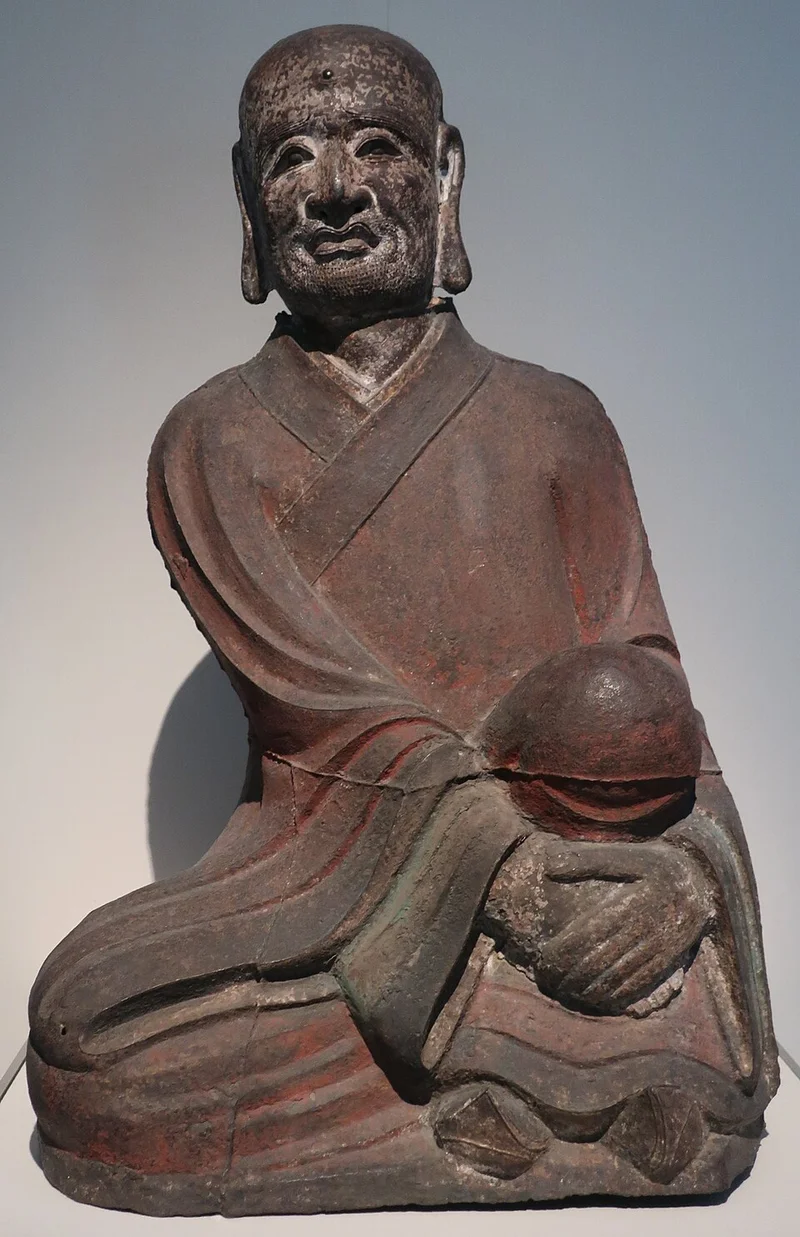
Parshva
1st c. BCE – Unknown
Pārśva (Pāli: Pāssa) is the tenth patriarch in the Chan list and one of the few figures in the middle section of the lineage with a discernible historical basis. He is mentioned in Sarvāstivādin sources as one of the conveners of the Fourth Council under the Kuṣāṇa emperor Kaniṣka (1st–2nd century CE), held in Kashmir or at Jālandhara, where the *Mahāvibhāṣā*—the great Sarvāstivādin commentary on the *Jñānaprasthāna*—was composed[1]. He is associated with the *Vibhāṣā* school of northwestern Buddhist scholasticism and is sometimes credited with the conversion of the young Aśvaghoṣa[2].
Tradition holds that Pārśva ordained late in life—at sixty or eighty, depending on the source—and made a vow not to lay his side down on a bed until he had attained full liberation; his Sanskrit name *pārśva* ("side") is explained etiologically through this resolve[3]. He is depicted as an elder of immense practice-power and considerable scholarship, the bridge between the early lineage and the Mahāyāna philosophical figures who follow. Dumoulin notes that Pārśva is one of three or four names in the middle stretch of the Chan twenty-eight where the tradition firmly attaches to a person known from the Sarvāstivādin record[4].
Names
Disciples of Parshva
Teachers and lineage of Parshva
Teacher / root master:
Teachings
- dialogueThe Vow of Pārśva
When Pārśva was ordained at the age of sixty, he made a vow never to lay his side (*pārśva*) upon a bed until he had fully realized liberation. A young monk asked him: 'Is this austerity not simply attachment to practice?' Pārśva said: 'You speak of attachment and non-attachment as though they were two things. My vow is not the door—it is the fire that burns the door away.' Keizan's verse: Sixty years of ordinary life— / then one night, no more lying down. / The body is like a standing mountain. / What is it that never sleeps?
- sayingWhat Does 'Buddha' Mean?
Pārśva said: 'People ask what the word Buddha means. It means awakened. Then they ask: awakened to what? To this—to what is here right now, before the question arose. The word is just a finger pointing at your own face.'
Other masters in Indian Patriarchs
Master Record Sources
- datesZen Editorial Overlay - Originals Curation
trad. 1st c. BCE
- nameZen Editorial Overlay - Originals Curation
Parshva
- schoolZen Editorial Overlay - Originals Curation
Indian Patriarchs
- teachersZen Editorial Overlay - Originals Curation
Buddhamitra
Pārśva (also Parshva) is counted the eleventh Indian patriarch; the Tibetan Buddhist Encyclopedia preserves the traditional account of his advanced age at ordination and his role in the Chan patriarchal succession.