Gayashata
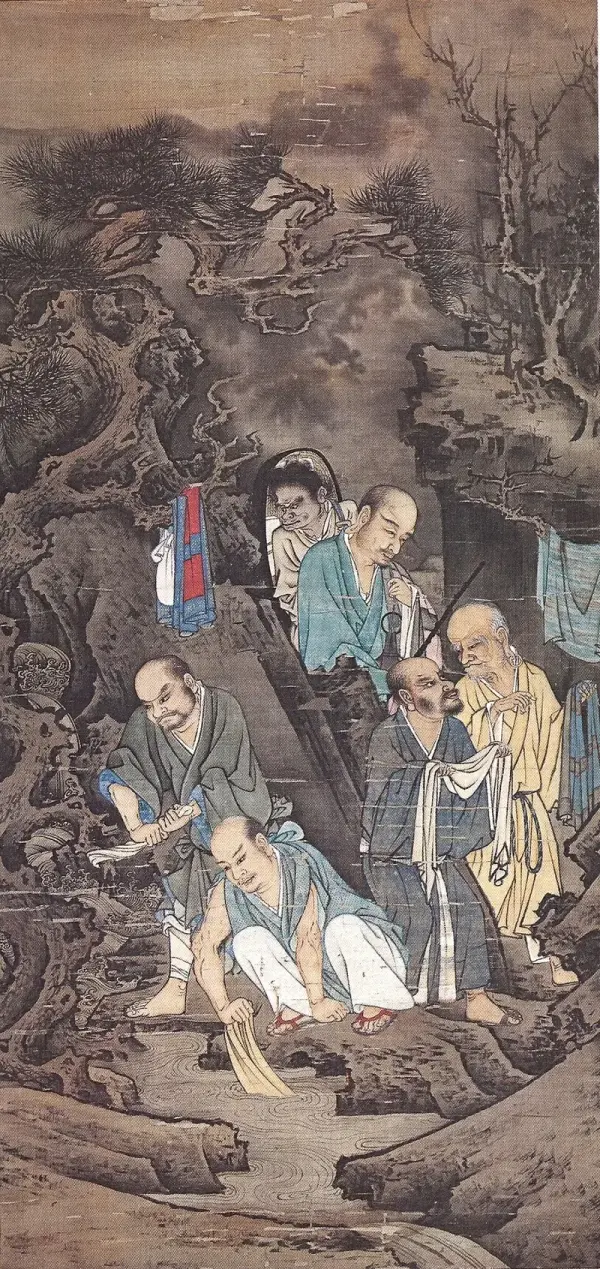
Gayashata
3rd c. – Unknown
Saṃghayaśas (transliterated *Gayashata* in the Chinese sources), eighteenth patriarch in the Chan list, is named in the *Jǐngdé Chuándēng Lù* as the disciple of Saṃghanandi and teacher of Kumārata[1]. He belongs to the legendary stratum of the late Indian lineage and has no extant attestation independent of the Chan transmission-of-the-lamp literature.
The traditional account describes a young brahmin from western India whom Saṃghanandi recognized through a sequence of natural-imagery exchanges (a wind-bell, a falling leaf) and brought into the lineage. Dumoulin notes that the use of natural-image *gōng'àn*-like vignettes for these middle-list patriarchs anticipates the literary style of mature Chan encounter dialogue[2].
Names
Disciples of Gayashata
Teachers and lineage of Gayashata
Teacher / root master:
Teachings
- dialogueWhat the Wind-Bell Answers
Saṃghayaśas heard a wind-bell ringing outside the window of a house he passed, and paused. A young brahmin came out and said: 'Why have you stopped?' Saṃghayaśas said: 'What is ringing?' The brahmin said: 'Wind and metal.' Saṃghayaśas said: 'And deeper than wind and metal?' The brahmin was silent, then said: 'I do not know.' Saṃghayaśas said: 'That silence is the answer. Come with me.' Keizan's verse: The bell does not know it rings. / The wind does not know it blows. / Somewhere between knowing and not knowing / the Dharma passes from hand to hand.
Other masters in Indian Patriarchs
Master Record Sources
- datesZen Editorial Overlay - Originals Curation
trad. 3rd c. CE
- nameZen Editorial Overlay - Originals Curation
Gayashata
- schoolZen Editorial Overlay - Originals Curation
Indian Patriarchs
- teachersZen Editorial Overlay - Originals Curation
Sanghanandi
Gayāśāta is counted the sixteenth Indian patriarch, positioned between Āryadeva and Kumārata in Chan lineage reckoning; the Tibetan Buddhist Encyclopedia documents his traditional biography.