Sanghanandi
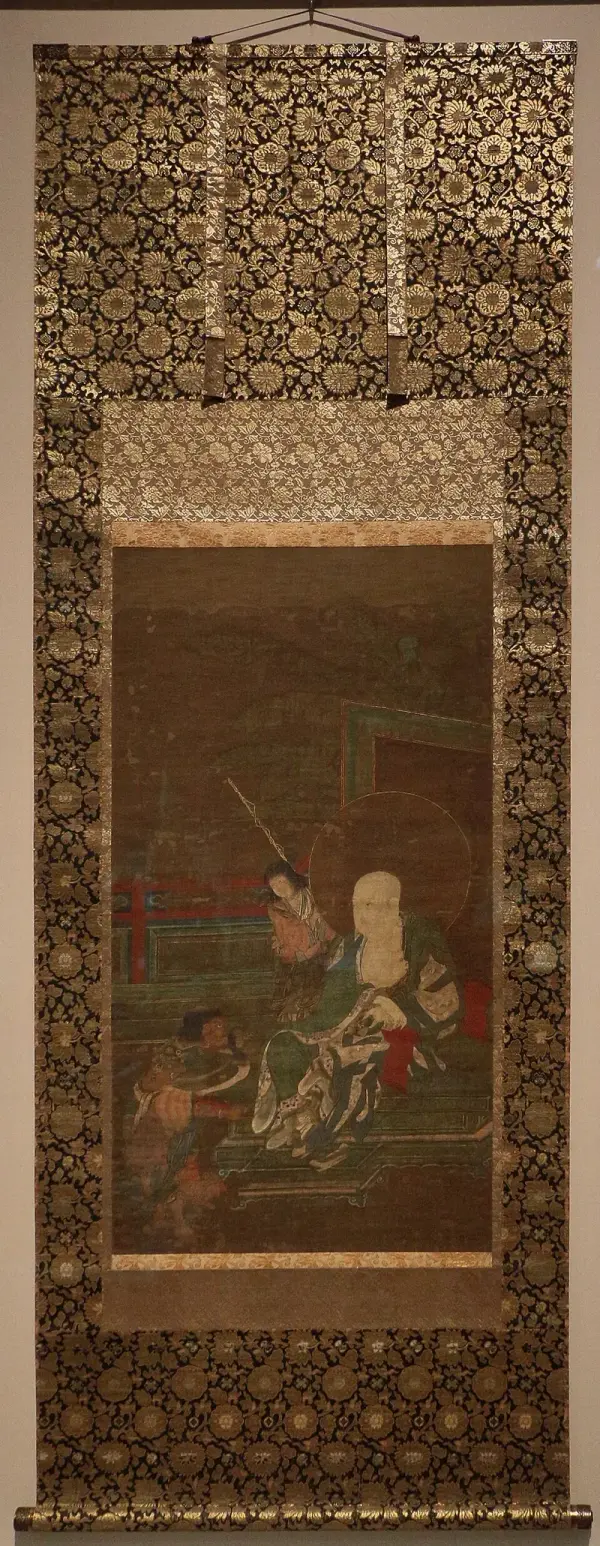
Sanghanandi
3rd c. – Unknown
Saṃghanandi ("Joy of the Saṅgha"), seventeenth patriarch in the Chan list, is named in the *Jǐngdé Chuándēng Lù* as the disciple of Rāhulabhadra and teacher of Saṃghayaśas (Gayashata)[1]. The traditional narrative describes him as the son of a king who renounced his royal inheritance after a youthful realization of impermanence and entered the saṅgha—a story-pattern that mirrors the Buddha's own renunciation and recurs throughout Indian Buddhist hagiography[2].
He belongs to the legendary stratum of the late Indian lineage. As Dumoulin observes, the Chan compilers used recurring narrative motifs—royal renunciation, debate-conversion, miraculous recognition—to give the patriarchal sequence rhetorical coherence even where independent biographical material was unavailable[3].
Names
Disciples of Sanghanandi
Teachers and lineage of Sanghanandi
Teacher / root master:
Teachings
When Saṃghanandi was dwelling in a stone cave, a wind-bell rang in the doorway. Saṃghayaśas asked him: 'Is it the bell ringing, or the wind ringing?' Saṃghanandi said: 'Neither the bell nor the wind—it is the mind ringing.' Saṃghayaśas said: 'And the mind?' Saṃghanandi said: 'Hear it yourself.' Keizan's verse: Wind or bell—the argument is endless. / The one who argues does not hear. / Right now, in the stillness before thought— / is there any sound at all?
- sayingThe Kingdom Left Behind
When Saṃghanandi renounced his royal inheritance to enter the saṅgha, his father asked: 'What will become of the kingdom?' Saṃghanandi said: 'The same thing that became of every kingdom before it.' His father wept. Saṃghanandi said: 'You see—this is why I am going. I do not wish to be the cause of that kind of sorrow for the rest of my life.'
Other masters in Indian Patriarchs
Master Record Sources
- datesZen Editorial Overlay - Originals Curation
trad. 3rd c. CE
- nameZen Editorial Overlay - Originals Curation
Sanghanandi
- schoolZen Editorial Overlay - Originals Curation
Indian Patriarchs
- teachersZen Editorial Overlay - Originals Curation
Rahulata
Saṃghanandī is counted the seventeenth or eighteenth Indian patriarch; the Tibetan Buddhist Encyclopedia documents his role in the chain of transmission leading toward the later patriarchs.