Haklena
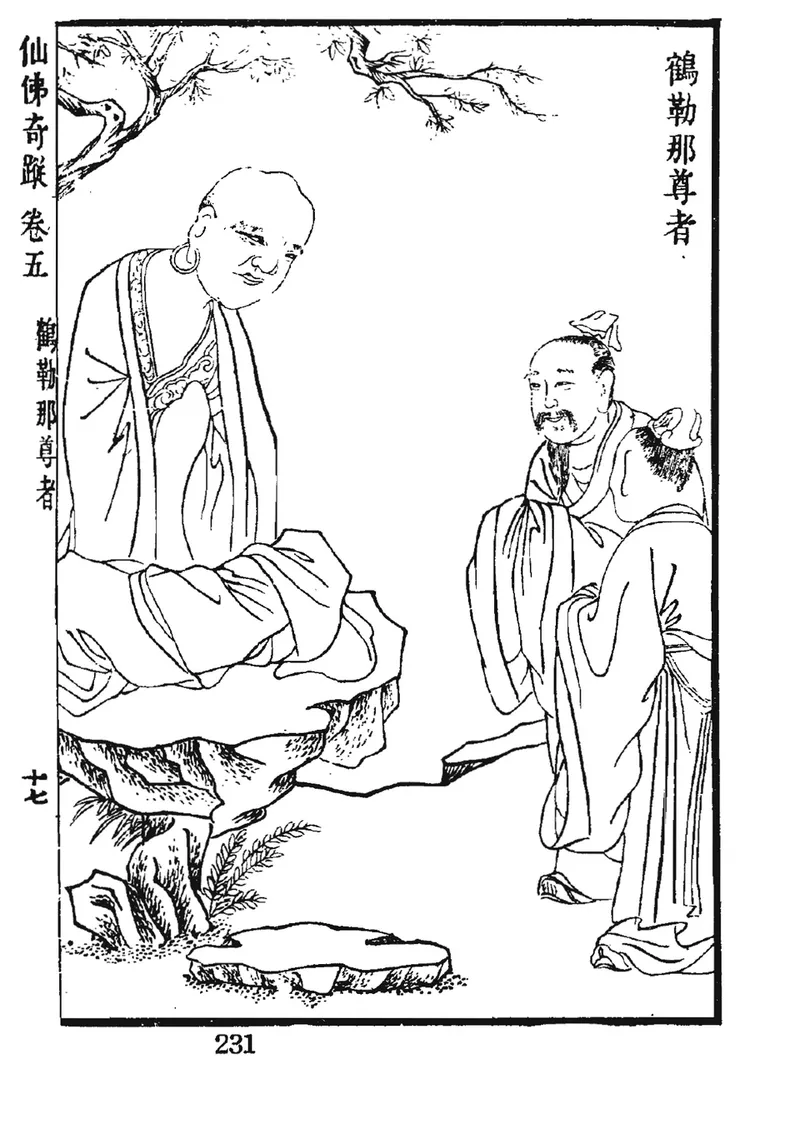
Haklena
4th c. – Unknown
Haklenayaśas (Chinese: 鶴勒那, transliterated *Haklena*), twenty-third patriarch in the Chan list, is named in the *Jǐngdé Chuándēng Lù* as the disciple of Manorhita and teacher of Siṃha Bhikṣu[1]. The traditional account describes a teacher of central India whose preaching attracted a following of cranes (*haklena* glossed as "crane-fame"), an etiology that signals the legendary character of the figure rather than supplying biographical detail[2].
Dumoulin notes that the names in the immediate lead-up to Siṃha Bhikṣu and the persecution narrative function compositionally to set the stage for the lineage's dramatic late-Indian arc; Haklenayaśas's role is structural[3].
Names
Disciples of Haklena
Teachers and lineage of Haklena
Teacher / root master:
Teachings
- dialogueWhere the Cranes Gather
Haklenayaśas taught in a region where cranes were said to follow him, gathering wherever he stopped to speak. A minister of the king asked: 'Why do cranes follow a monk?' Haklenayaśas said: 'Why does a monk follow the Dharma?' The minister said: 'Because it is beneficial.' Haklenayaśas said: 'Ask the cranes.' Keizan's verse: Birds of the air know something / that scholars argue about all day. / Not by reading or debating / but by gathering where the stillness is.
- dialogueThe Lion Among Students
When Haklenayaśas first saw Siṃha Bhikṣu among a group of young men, he said to a companion: 'That young man carries the lion's roar. He does not yet know it.' The companion said: 'How can you tell?' Haklenayaśas said: 'The same way the lion knows the lion—not by looking, but by something older than looking.'
Other masters in Indian Patriarchs
Master Record Sources
- datesZen Editorial Overlay - Originals Curation
trad. 4th c. CE
- nameZen Editorial Overlay - Originals Curation
Haklena
- schoolZen Editorial Overlay - Originals Curation
Indian Patriarchs
- teachersZen Editorial Overlay - Originals Curation
Manorhita
Haklena (also Haklēna or Gayāśāta's heir in some lists) is counted among the Indian patriarchs in Chan/Zen reckoning; the Tibetan Buddhist Encyclopedia preserves his traditional patriarchal biography.