Simha
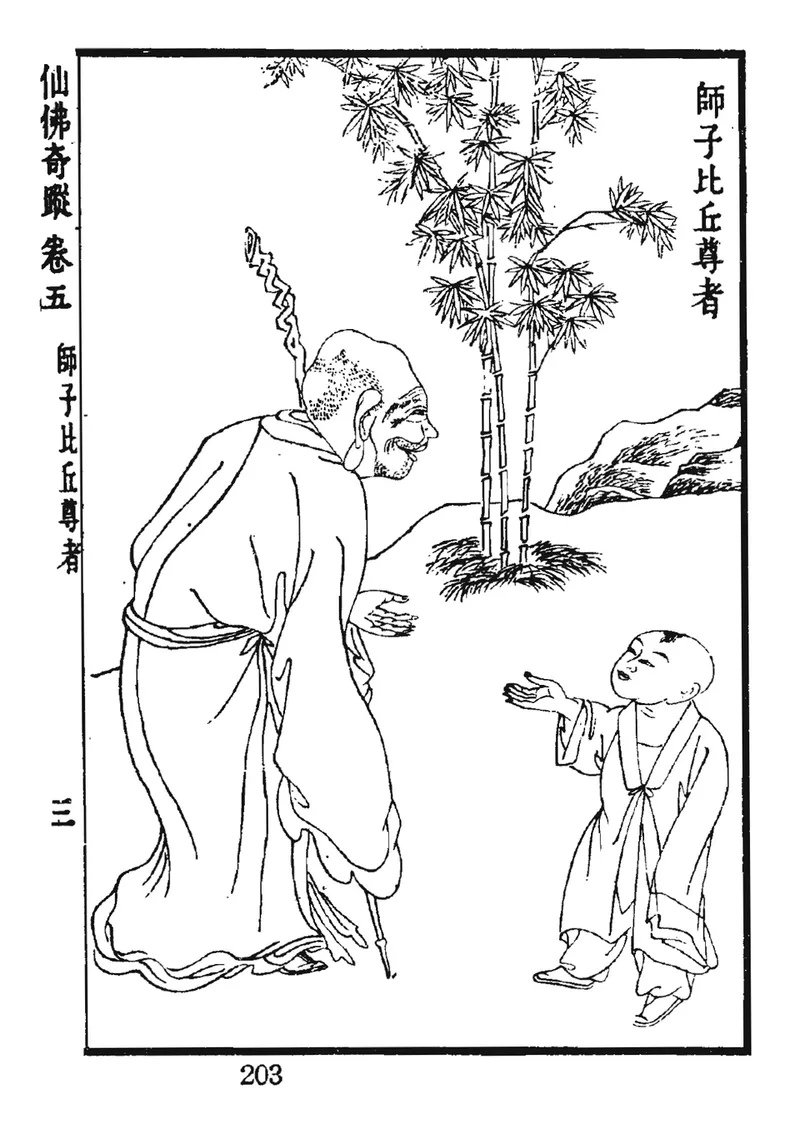
Simha
5th c. – Unknown
Siṃha Bhikṣu (also Siṃhabodhi or Siṃhayāśas), twenty-fourth patriarch in the Chan list, is among the more substantively narrated figures of the later Indian lineage[1]. The earliest extended account of him appears in the Chinese Buddhist historical compilation *Fù Fǎ Zàng Yīnyuán Zhuàn* (The Causes and Conditions of the Transmission of the Dharma-Treasury), a fifth-century translation that records the chain of Indian masters extending into Sarvāstivādin scholastic circles[2].
According to the Chan account, Siṃha taught in Kashmir and was martyred during a persecution under the Hūṇa king Mihirakula (early 6th c.), a ruler widely associated in Indian sources with the violent suppression of Buddhism[3]. The traditional narrative states that when Siṃha was beheaded, milk flowed from the wound in place of blood—an iconographic motif used in Indian and Chinese hagiography to indicate the spiritual purity of the martyr; the detail derives from a stock Buddhist topos and is not independently attested[4].
His martyrdom marks a turning point in the Chan reckoning. The lineage's continuation through Vasiṣṭha (Vasasita), Puṇyamitra, and finally Prajñātāra (Bodhidharma's teacher) is presented as a transmission that survived under conditions of persecution—a theme that resonates with the later experience of Chinese Chan under the suppressions of the Northern Zhou (574–578) and the Tang Huichang persecution (845)[5]. Dumoulin notes that this narrative arc is structurally important for the Chan self-understanding: the lineage is not the property of any state and cannot be destroyed by political force.
Names
Disciples of Simha
Teachers and lineage of Simha
Teacher / root master:
Teachings
- dialogueThe Final Transmission
As Siṃha Bhikṣu was about to be executed by the order of King Mihirakula, he asked Vasiṣṭha to come close. He said: 'The king takes my head. Does the Dharma also lose its head?' Vasiṣṭha said: 'The Dharma has no head to lose.' Siṃha said: 'Then nothing is lost today.' And he placed his neck before the sword. Keizan's verse: The sword severs the neck / but cannot touch what was never born. / Milk pours from the wound / and the ground knows what blood never could.
- sayingThe Lion's Roar
Siṃha Bhikṣu said: 'The lion does not announce before it roars. The roar simply comes, and everything in the forest becomes still. When you have truly entered the Dharma, your very presence becomes a lion's roar. Not that you shout—but that around you, distractions become still.'
Other masters in Indian Patriarchs
Master Record Sources
- datesZen Editorial Overlay - Originals Curation
trad. 5th c. CE
- nameZen Editorial Overlay - Originals Curation
Simha
- schoolZen Editorial Overlay - Originals Curation
Indian Patriarchs
- teachersZen Editorial Overlay - Originals Curation
Haklena