Kobun Chino Otogawa
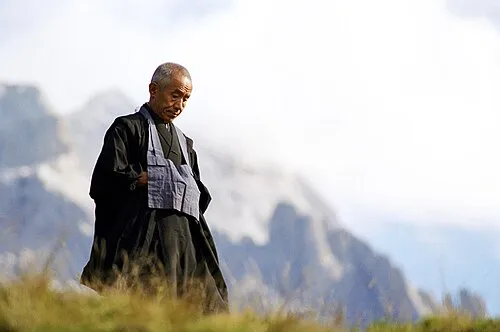
Kobun Chino Otogawa
1938 – 2002
Kōbun Chino Otogawa (乙川 弘文; February 1, 1938 – July 26, 2002) was a Japanese Sōtō priest whose quiet, intuitive teaching seeded a generation of independent California and New Mexico sanghas, and whose private students included the founders of Silicon Valley[1]. Born into a temple family in Kamo, Niigata Prefecture — his older brother Keibun Otogawa later succeeded their father at the family temple — he completed undergraduate studies at Komazawa University, took a master's degree in Mahayana Buddhism at Kyoto University, and then trained for three years at Eihei-ji[1]. In 1967, at the invitation of Shunryū Suzuki, he came to California to help establish the new monastic training program at Tassajara Zen Mountain Center, where he served as Suzuki's assistant until 1970[1][2].
After leaving Tassajara, Kōbun founded or led a constellation of small, deliberately non-institutional centers: Haiku Zendo (later Bodhi) in Los Altos, California, beginning in 1970; Hōkō-ji near Taos, New Mexico; and Jikō-ji in the Santa Cruz Mountains, founded in 1983, which remains his principal seat in the West[1][2]. He taught regularly at Naropa University in Boulder and travelled often to Europe; in his later years he spent extended periods in Switzerland with his student Vanja Palmers at the Felsentor sangha[1]. Outside formal Zen circles he is best known as the personal Buddhist teacher of Steve Jobs, whom he met in the 1970s; on March 18, 1991, he presided over the marriage of Steve Jobs and Laurene Powell, and Jobs reportedly considered ordaining as a monk under him[1].
Kōbun published comparatively little — his teaching was overwhelmingly oral — but contributed essays and dharma talks to *One Bird, One Stone: 108 American Zen Stories* (Sean Murphy, Renaissance, 2002) and to the posthumous collection *Embracing Mind: The Zen Talks of Kobun Chino Otogawa* (edited by Judy Cosgrove and Shoryu Bradley, Jikoji, 2016)[1]. He died on July 26, 2002, at a retreat house in Switzerland, drowning together with his five-year-old daughter Maya in a small pond on the property; he had jumped in to save her[1]. He gave Dharma transmission to nine successors: Carolyn Atkinson (Santa Cruz), Angie Boissevain (San Jose), Ian Forsberg (Taos), Jean Leyshon (Taos), Tim McCarthy (Kent, Ohio), Martin Mosko (Boulder), Michael Newhall (Jikō-ji, Los Gatos), Vanja Palmers (Lucerne), and Bob Watkins (Taos), whose centers continue to teach in his understated, improvisatory style[1][3].
Names
Teachers and lineage of Kobun Chino Otogawa
Teachers / root masters:
Teachings
- proverbArchery Without Arrow
Draw the bow without an arrow. The bow is heaviest then. After many drawings, the bow becomes part of the arm; only then is the arrow placed.
- proverbZazen as Poetry
Zazen is the body's poetry. It is written without ink, read without eyes, and yet a careful student can recognize the lines years later in the way the body sits.
- proverbDo Not Imitate Your Teacher
Do not imitate your teacher's posture, voice, or favorite cup. Imitate his willingness to sit. The rest will fit your body in its own way.
Other masters in Sōtō
Master Record Sources
1938-2002
Kobun Chino Otogawa
- schoolKobun-sama - Biography
Soto
- teachersKobun-sama - Biography
Shunryu Suzuki
1938-2002
Kobun Chino Otogawa
Soto