Shunryu Suzuki
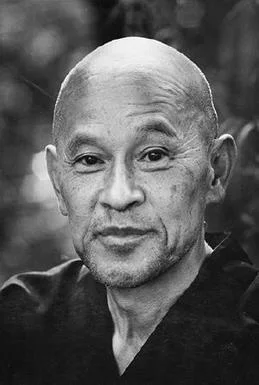
Shunryu Suzuki
1904 – 1971
Shunryū Suzuki (born Toshitaka Suzuki, May 18, 1904, in Kanagawa Prefecture, Japan; died December 4, 1971, in San Francisco) was the Sōtō Zen priest who, more than any other figure, transmitted Japanese Sōtō practice to American counterculture. He began monastic apprenticeship at age twelve under Gyokujun So-on Suzuki, a disciple of his father, and was ordained as a novice on his thirteenth birthday in 1917, receiving the Buddhist name Shōgaku Shunryū[1]. He attended Sōtō preparatory school in Tokyo from 1924, entered Komazawa University in 1925, and on August 26, 1926, at age twenty-two, received Dharma transmission from So-on; he was installed as the 28th abbot of Zoun-in on January 22, 1929, and subsequently trained at Eihei-ji (1930) and Sōji-ji in Yokohama (1931)[1].
On May 23, 1959, Suzuki arrived in San Francisco at age fifty-five to attend to Sōkō-ji, then the sole Sōtō temple in the city, expecting a three-year posting; the wave of young American students who began sitting zazen with him before dawn made the assignment permanent[1]. With his student Zentatsu Richard Baker he helped seal the 1966 purchase of Tassajara Hot Springs, founding what became Tassajara Zen Mountain Center, the first Sōtō Zen training monastery established outside Asia[1]. He moved the practice community to 300 Page Street in 1969, and the constellation of Sōkō-ji, the Page Street city center, and Tassajara — later joined by Green Gulch Farm — coalesced into San Francisco Zen Center, today one of the largest Sōtō sanghas outside Japan[2].
His lectures, edited by Trudy Dixon and Marian Derby, were published as *Zen Mind, Beginner's Mind* (Weatherhill, 1970), whose opening line — "In the beginner's mind there are many possibilities, in the expert's mind there are few" — became one of the most quoted sentences in Western Buddhism[1]. Two posthumous volumes followed: *Branching Streams Flow in the Darkness: Zen Talks on the Sandokai* (University of California Press, 1999) and *Not Always So: Practicing the True Spirit of Zen* (HarperCollins, 2002)[1]. David Chadwick's authorized biography *Crooked Cucumber: The Life and Zen Teaching of Shunryu Suzuki* appeared in 1999[1]. Suzuki gave Dharma transmission to Zentatsu Richard Baker shortly before his death in December 1971, and to his son Hoitsu Suzuki, who succeeded him at Rinso-in in Japan[1]. His teaching style — informal, unsystematic, insistent that "zazen itself is enlightenment" — set the template for Sōtō practice across the West[2].
Names
Disciples of Shunryu Suzuki
Teachers and lineage of Shunryu Suzuki
Teacher / root master:
Works
- Dharma-talks collectionZen Mind, Beginner's Mind
The founding text of American Sōtō Zen as a popular tradition. A collection of Suzuki Rōshi's dharma talks at the Los Altos zendo, edited by Trudy Dixon and Richard Baker after Suzuki's transcribed teisho and informal Q&A. Has remained in print continuously since 1970 and is the single most widely-read Zen book in English.
- Dharma-talks collectionBranching Streams Flow in the Darkness: Zen Talks on the Sandokai
Suzuki's sustained 1970 lecture series on Sekitō Kisen's Sandōkai (Identity of Relative and Absolute), edited from transcript by Mel Weitsman and Michael Wenger and published posthumously.
- Dharma-talks collectionNot Always So: Practicing the True Spirit of Zen
A second posthumous collection of Suzuki's dharma talks, edited by Edward Espe Brown, covering his later years at Tassajara and San Francisco.
Teachings
- proverbNo Gaining Idea
As long as you have some gaining idea in what you do, it is not true practice.
- proverbMoment After Moment
The true purpose of Zen is to see things as they are, to observe things as they are, and to let everything go as it goes.
- proverbNothing Special
Nothing we see or hear is perfect. But right there in the imperfection is perfect reality.
- proverbPulling Weeds
We pull out the weeds and bury them near the plant to give it nourishment. You should rather be grateful for the weeds, because eventually they will enrich your practice.
To give your sheep or cow a large, spacious meadow is the way to control him. So it is with people: first let them do what they want, and watch them. To watch them is the best policy.
- proverbBurn Yourself Completely
When you do something, you should burn yourself up completely, like a good bonfire, leaving no trace of yourself.
- proverbIf Your Mind Is Empty
If your mind is empty, it is always ready for anything. It is open to everything.
Zen is not some kind of excitement, but concentration on our usual everyday routine.
- proverbAccept Yourself
The most important point is to accept yourself and stand on your own two feet.
- sayingBeginner's Mind
In the beginner's mind there are many possibilities, but in the expert's mind there are few. In the beginner's mind there is no thought 'I have attained something.' When we have no thought of achievement, no thought of self, we are true beginners. Then we can really learn something.
- proverbBeginner's Mind
In the beginner's mind there are many possibilities; in the expert's mind there are few. Bring the beginner with you to the cushion every morning, and the morning is wide.
Each of you is perfect the way you are — and you can use a little improvement. Both are true at once; neither cancels the other.
- proverbNot Deeper, Just Here
If your sitting feels shallow today, do not look for deeper sitting. Look for being here. The deepening will follow you in without an invitation.
Other masters in Sōtō
Master Record Sources
1904-1971
Shunryu Suzuki
Soto
Gyokujun So-on